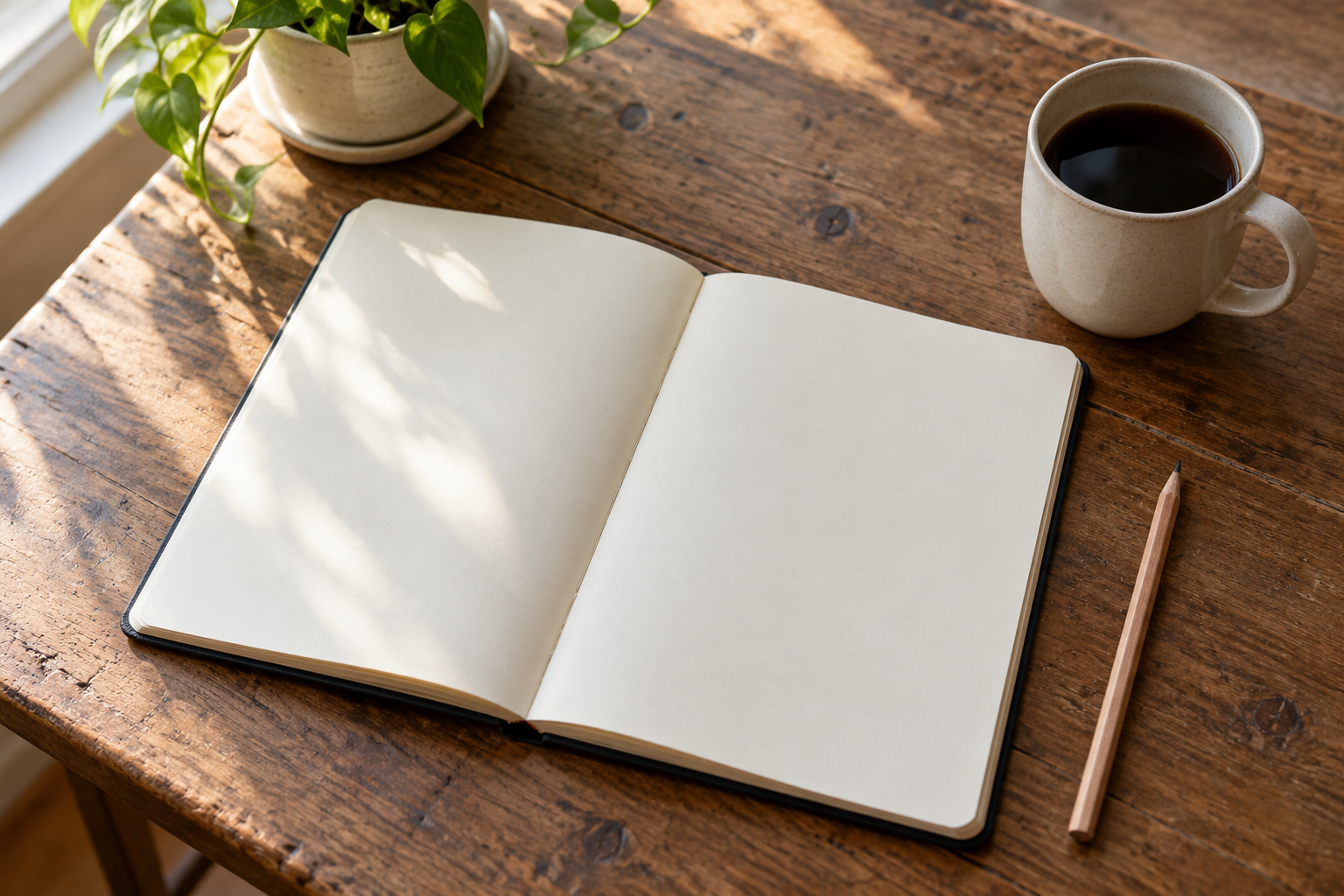
A new notebook presents a surprisingly difficult invitation. There is all that clean paper, waiting for something worth keeping. A shopping list seems too ordinary for it. An ambitious opening page feels like a promise you may not want to maintain. The notebook remains untouched while scraps of paper accumulate around it.
An everyday notebook becomes useful when you let it contain everyday material. It can hold the measurements of a shelf, a phrase you want to remember, a plan for Saturday, and three unfinished thoughts about dinner. It does not have to become a beautiful object with a single consistent purpose. It can be the place where things go before you know what they are.
Make the first mark deliberately ordinary
Write the date on the first available page. Under it, record something small and real: an errand, an observation from the window, or a question you want to ask someone. You have now begun. There is no need to invent a mission statement, draw a title page, or describe the person you hope the notebook will help you become.
If the first page still feels difficult, begin on the second. Leave the opening blank for an address or a later index. This is a practical workaround, not a flaw you must overcome before you deserve to write. The notebook should make recording things easier; its layout is allowed to cooperate with you.
Choose a pen or pencil you already enjoy using. You do not need a collection of colors. One readable mark is enough. If ink shows through the paper, use one side of the page or a different pen. Solving the immediate inconvenience will help more than researching an ideal setup for a future version of the habit.
Give unlike things permission to sit together
Separate notebooks for separate subjects sound orderly, but they also create a decision at every moment: which book needs this note? One book can be more convenient if your aim is simply to catch things. The list of garden supplies can sit beside the sentence you thought of on the bus.
Use a short heading when it helps: “Kitchen measurements,” “For the weekend,” or “Ask at the repair shop.” Leave a line between unrelated entries. Those small distinctions are often sufficient. You can add more structure later, after you discover what you actually record, rather than designing categories for notes that do not yet exist.
A notebook can also contain material you never intend to keep. Work out an awkward sum. Try five names for a project. Rewrite the same sentence until its rhythm improves. The page does not have to justify its space by producing a permanent result. Sometimes its job is to hold a thought long enough for you to work with it.
Leave yourself a route back
Finding a useful note matters more than making every page look coordinated. Number the pages if the notebook has no numbers, and reserve a few lines at the back for an index. Add only entries you expect to revisit. “Bike repair questions, 12” is useful. Indexing every shopping list creates work without much return.
Another option is a simple mark beside unfinished tasks. Draw an empty square before an action, then fill it when the action is complete. If you move a task elsewhere, add a small arrow and its new location. Use whatever marks are clear to you. An elaborate symbol system is unnecessary unless learning one is part of the enjoyment.
When you review a few pages, look for things that still need action. Transfer an appointment to the calendar you actually check. Put a necessary purchase on the list you bring to the store. A notebook can collect information without being the final destination for every kind of information. That distinction keeps it from becoming a mysterious second calendar.
Write when there is something to catch
You can keep the book near an activity that already happens: beside the kettle, inside the bag you carry, or on the desk where you plan errands. A convenient place is more useful than a solemn rule about writing every morning. For ideas about placing it without adding clutter, consider giving everyday objects a place to land.
Daily writing is optional. If the book goes unused for a week, open to the next space and continue. You do not need to account for the gap. A notebook with a page from March beside a page from May can still be an excellent tool. Its usefulness is measured by whether it holds something you wanted to record.
You may find that one particular kind of entry becomes enjoyable: a short description of the weather, small sketches, or sentences overheard without identifying the speakers. Follow that interest if you wish. Let repeated use reveal the notebook’s character instead of assigning it a demanding identity before the first week is over.
Allow the pages to look used
Crossing something out is often enough. You do not have to disguise every mistake with decoration. If a page contains private material, remove it or cover it securely as appropriate; if it merely contains a poor idea, you can turn the page. The notebook is not a public performance unless you choose to share it.
When the book fills, write a rough date range inside the cover and put it somewhere sensible. Before starting the next one, carry forward only the notes you still need. Do not transcribe the whole volume as a duty. Some notes have finished their work. Others will be useful later because they remain where you can find them.
The next notebook can begin with something just as ordinary as the first: a measurement, an errand, a thought. By then, the clean pages may feel less like a test. They are available space. You are allowed to use it.