The rush around dinner often begins before anyone touches a pan. There is a half-formed idea of what to cook, a counter occupied by the afternoon, and the feeling that a proper meal must include several things arriving together. Even a familiar dish can become awkward under those conditions. Making a weeknight dinner feel less rushed starts with deciding what the evening can reasonably hold.
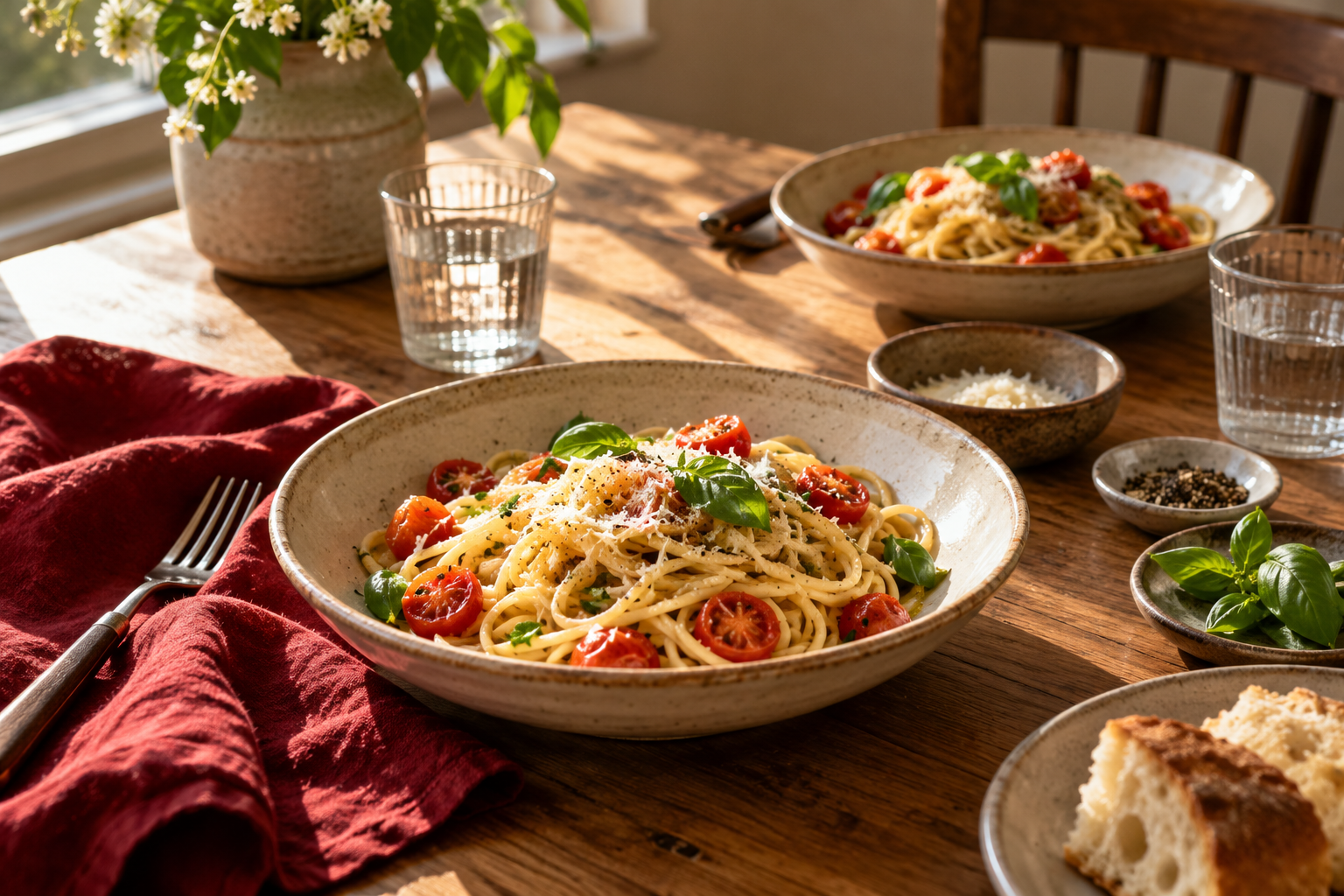
Picture a modest dinner: pasta with a sauce you know, something green, and water on the table. Nothing needs a dramatic finish. The useful question is how to make those few elements fit together without spending the entire meal thinking about what still needs doing. A shorter menu helps, but so does giving the meal a clear beginning and an unmistakable stopping point.
Decide what will carry the meal
Choose one part of dinner to receive your attention. That might be a pan of vegetables, a favorite rice dish, or a sandwich assembled carefully enough to feel complete. Let the other elements be straightforward. If the main dish has several steps, the accompaniment can be something that needs little more than arranging on a plate. If the main is simple, perhaps there is room to make a dressing or toast some bread.
This is a matter of distributing effort, rather than assigning value to particular foods. A meal does not become more welcoming because every component was difficult. Give yourself permission to serve two things when three would require another pan, another decision, and another stretch of standing at the stove. You can always make a more elaborate dinner on an evening when that sounds enjoyable.
Keep a few meal shapes available rather than maintaining a rigid rotation of recipes. A bowl with a base and toppings, something on toast, pasta with one accompaniment, or a tray of ingredients served together can each become many different dinners. The shape answers the structural question first. You can choose the details from what you have and what appeals today.
Write the order, not another recipe
Before starting, take a moment to identify what takes longest, what can wait, and what needs attention at the end. A scrap of paper with three short lines can be enough: put the main on, prepare the accompaniment, finish and serve. If you are following a recipe, read through it before switching on anything. Discovering an extra bowl or missing utensil halfway through is an avoidable interruption.
Gather the tools you expect to use. Clear a place for chopping, put a bowl nearby for scraps, and bring out the serving spoon. You are making a small working area, not resetting the entire kitchen. A clean patch of counter is often more useful during dinner preparation than a perfectly organized cupboard across the room. Leave the larger household jobs outside this particular task.
Build in an easy waiting place. Put plates together where they are accessible. Set out ingredients that will be used at the end in the order you will reach for them. If a garnish makes the sequence complicated, leave it off. The point of planning the order is to remove little collisions, not to turn an ordinary evening into a timed performance.
Set the table while there is still a pause
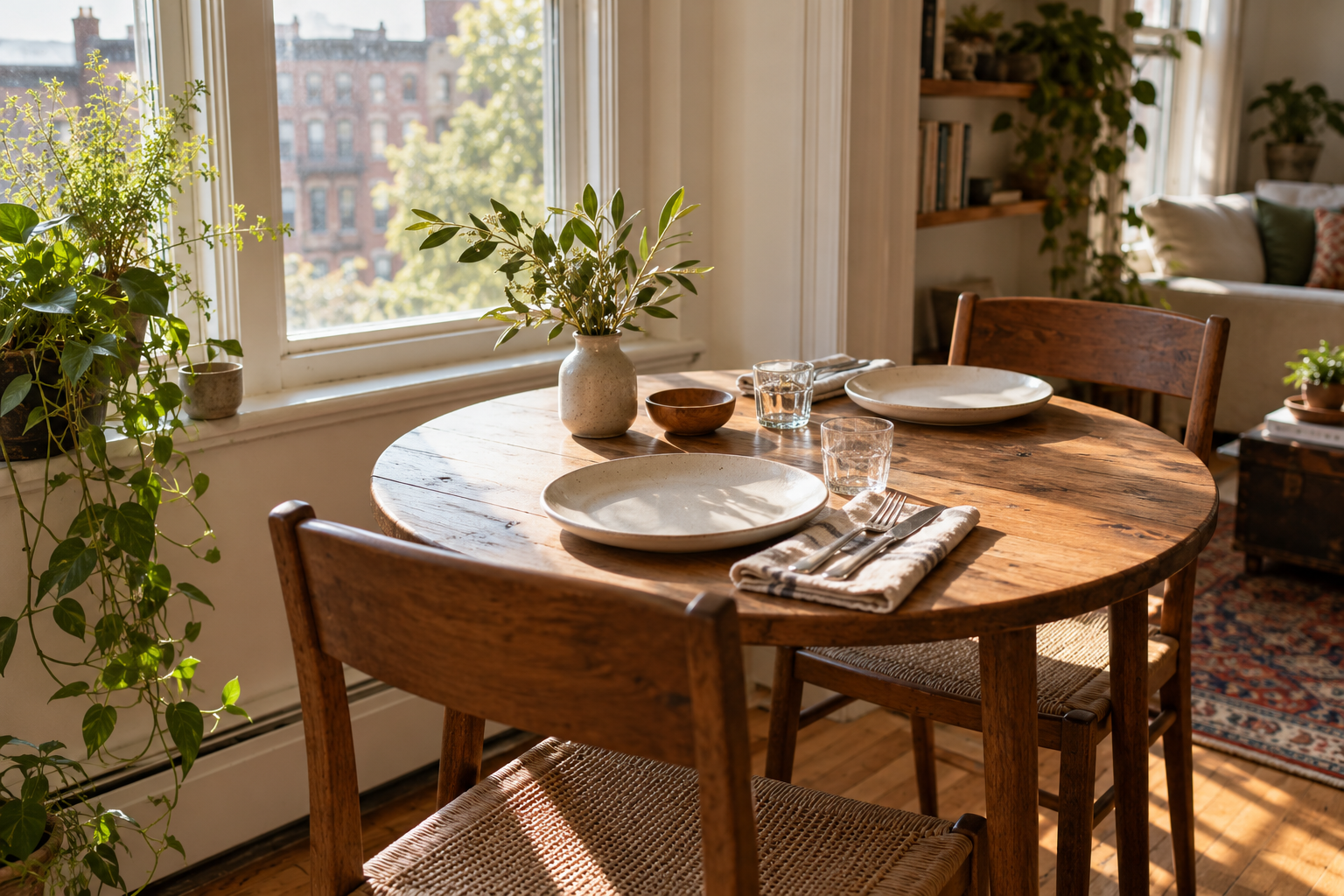
A table can mark the difference between making food and sitting down to eat it. This need not involve special dishes. Put down whatever plates and glasses you use every day, then move unrelated objects somewhere they can stay until after dinner. A folded napkin or a small cloth can give the setting a sense of intention without adding another task that needs maintaining.
When space is limited, decide which things actually belong on the table. A large serving dish may be better left on the counter, with plates filled there. Water can go in a small jug if one fits comfortably. The ideas in making a small table welcoming are especially useful when the same surface has already served as a desk or workbench earlier in the day.
If other people are eating with you, give them a specific task that can be completed independently. “Please put out four glasses” is easier to act on than a general request for help. If you are eating alone, you still get to have a place setting. There is no need to wait for company before clearing yourself a comfortable seat.
Allow dinner to be finished
One source of hurried eating is continuing to improve the meal after it has been served. The missing condiment, the dish you suddenly remember, the extra flourish: each can pull you away again. Decide on a reasonable point when dinner is ready enough. Bring what you intended to bring, sit down, and leave optional additions optional.
The room can stay ordinary. You do not need a playlist, fresh flowers, matching crockery, or candles unless one of those things is something you already enjoy. Try one small signal that cooking has ended: switch off the bright task light, move the chopping board aside, or take off the apron. A change that belongs naturally to your home is more useful than a borrowed ritual that feels like work.
Conversation can start small too. There is room for a story from the day, a question about tomorrow, or a quiet meal with no particular subject. If devices keep calling for attention, you could try the gentle arrangements in a phone-free meal. The useful part is making a shared decision rather than interrupting dinner to police it.
Leave yourself a kinder ending
Before cooking, decide what clearing up will look like. Perhaps plates get carried through together and the rest waits until after a short sit. Perhaps the kitchen needs to be usable immediately because someone else will cook later. Make that choice according to the household, rather than letting every evening end in a negotiation over a sink.
Notice what actually helped. It might have been serving fewer dishes, setting the table earlier, or refusing to start an unrelated cleaning job while a pan was on. Keep that detail for the next evening. A less rushed dinner is built from arrangements you can repeat without much thought, until the meal has enough space around it to feel like part of the evening instead of the last demand of the day.