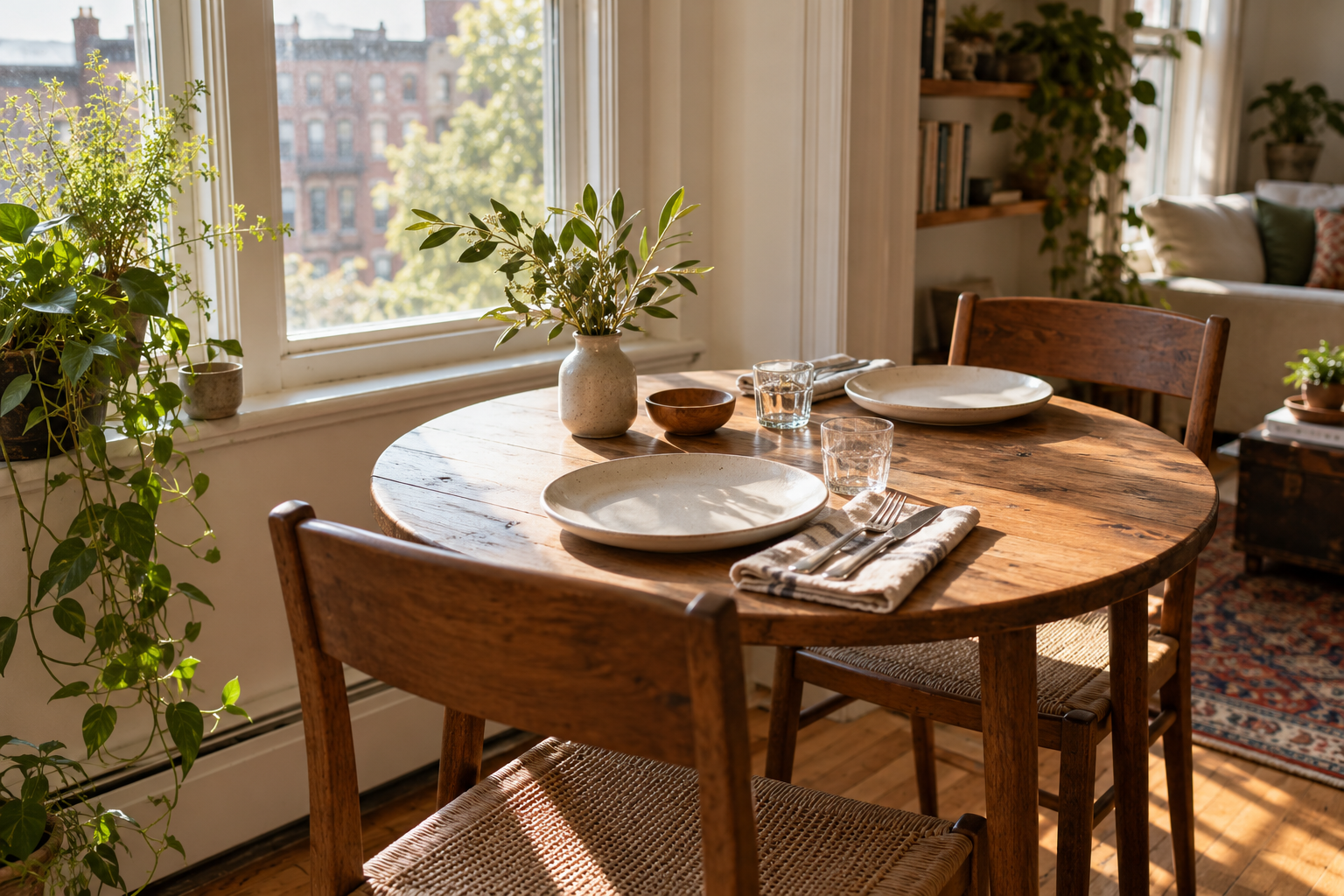
A small dining table asks you to choose. There may be room for two plates and a jug, or for a serving bowl in the middle, but perhaps not all of them at once. That limitation can make hosting seem like a problem of missing furniture. More often, it is a question of what the table needs to do and which jobs can happen somewhere else.
A welcoming table gives people a place to settle. They should be able to put down a glass, move a chair, and reach their food without conducting a delicate rearrangement. Once those things work, a small surface can feel perfectly generous. There is intimacy in sitting close enough to talk easily, provided the arrangement leaves everyone a little breathing room.
Begin with the people, then the objects
Pull the chairs into the positions where they will be used. Sit down yourself before laying out the dishes. Check where knees go, whether a chair can move back, and whether a person near the wall can leave the table without asking everyone to stand. The table may look spacious when no one is seated and behave quite differently once coats, arms, and conversation arrive.
Set a plate and glass at each place. Add cutlery, then stop and look again. This is the useful foundation. A centerpiece, individual side dishes, extra glasses, and decorative layers should earn their space after everyone has a comfortable setting. If an object means someone must balance a glass close to an edge, it is asking too much of the meal.
It is fine to change the number of people you invite to suit the furniture. An invitation for two can be more comfortable than an invitation for four squeezed into the same corner. If you want a larger gathering, choose a different format: drinks with small plates, an informal buffet, or people eating in a couple of seating areas. The furniture need not impersonate a dining room twice its size.
Let another surface do some hosting
The table does not need to hold the whole meal. A nearby counter, sideboard, or sturdy shelf can carry serving bowls and spare glasses. Guests can fill their plates there before sitting down. Keep the path between those places straightforward and leave a clear landing space for a plate while someone serves themselves.
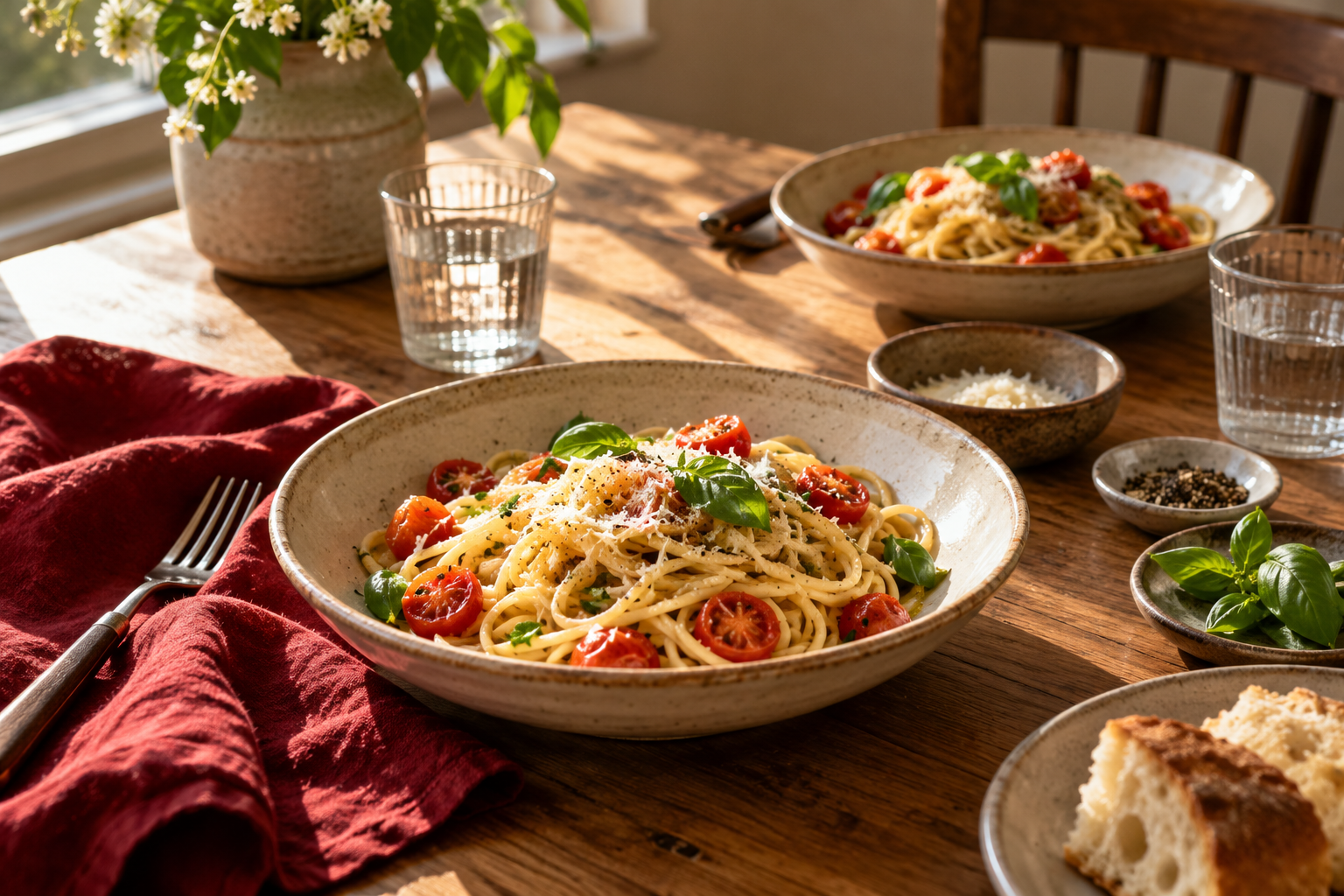
Choose the serving arrangement before choosing the vessels. A broad, beautiful platter might use nearly all the table’s center. Two smaller bowls on a counter may make the same food easier to reach. For a meal that passes around the table, pick dishes that are comfortable to lift and give the serving spoon somewhere obvious to rest. A folded cloth underneath can keep a spoon from becoming a puzzle between servings.
Condiments can travel in a small group instead of living beside every plate. Put only the ones that suit the meal within reach. Spare napkins, extra cutlery, and a second water bottle can wait nearby. This makes the tabletop quieter without removing the useful things from the room. Anyone who needs something can see where it is.
Make the setting feel like one thought
Matching dishes are optional. What helps is a connection among the pieces. That might be a restrained set of colors, similar shapes, or simply the same plain napkin at each place. A white plate next to a patterned bowl can look considered when the rest of the setting is uncomplicated. There is no requirement to buy a complete service for a small gathering.
Cloth changes the feel of a table, but it also occupies attention. A short runner may fit better than individual placemats whose corners overlap. On a very small round table, bare wood with napkins can be the clearest arrangement. Use what sits flat and leaves room for dishes; avoid anything that repeatedly catches a glass when someone reaches across.
Flowers, if you want them, can be low and modest. A few stems in a little vessel may suit the space better than a large bouquet. They can also sit on the adjacent shelf, where they still belong to the occasion without separating faces. An empty center is not a failure to decorate. It may be the space that makes the rest of the table pleasant to use.
Plan a meal that suits the setting
Consider how dinner will move. A dish served in one course means less exchanging of plates. Something assembled from components may invite more passing and reaching. Neither approach is inherently better, but the physical arrangement should fit the choice. If every course requires the host to disappear and reset the table, a simpler menu may let everyone spend more time together.
For a casual gathering, explain the arrangement in a sentence: plates are by the stove, water is on the shelf, and everyone can help themselves. Clear information makes an unfamiliar room easier to use. The same principle runs through relaxed potluck hosting, where deciding how food will arrive matters more than elaborating the decorations.
Keep a spot available for the ordinary things people bring. A chair piled with bags cannot also be someone’s seat. A place for coats near the entrance and a small landing area for phones can keep those objects from drifting onto the dining surface. They do not need a complicated storage system, only a destination that makes sense for the evening.
Leave a little looseness
A well-arranged table should survive someone moving a glass. If the setting works only when every item stays precisely aligned, it is too delicate for a comfortable meal. Once people arrive, let them adjust. Someone may prefer their water on the other side, move a napkin, or push a bowl toward a neighbor. Those small changes are signs that the space is being inhabited.
Afterward, pay attention to the practical details rather than judging the evening by a photograph. Did anyone struggle to reach a dish? Was the jug always in the way? Did serving from the counter work well? Keep the useful discoveries for next time. A small table becomes welcoming through these lived adjustments, with enough room for the meal and enough freedom for people to make themselves at home.