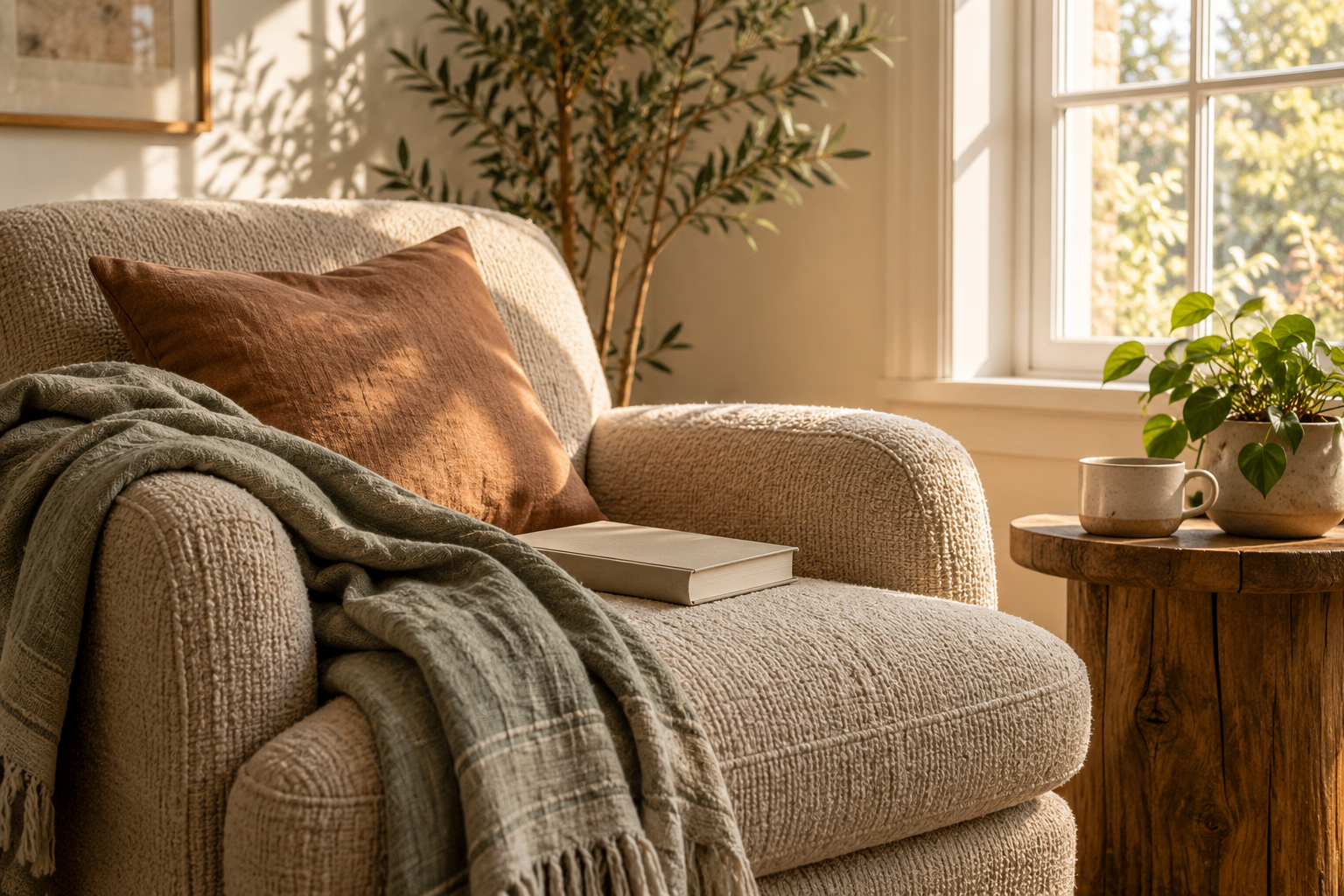
A reading corner is often presented as a little room inside a room: a particular chair, an arc of lamplight, a shelf of carefully arranged books, perhaps a perfectly draped blanket. That picture can make reading seem dependent on furniture you do not own. In practice, a useful corner begins with somewhere you already like sitting and a place to put the book when you stand up.
The corner need not be permanent or especially picturesque. An armchair that faces the window during the afternoon, one end of the sofa, or a kitchen chair with a comfortable cushion may work. The question is whether the arrangement supports the kind of reading you actually do. A place for ten pages before dinner can be as worthwhile as a seat intended for a whole rainy afternoon.
Borrow a seat before claiming a corner
Walk through the room and consider its existing seats at the time you usually read. The chair that looks inviting in morning sunlight may sit in shadow by evening. A quiet bedroom corner might be more appealing than the living room when someone else wants to watch television. Choose from the room as it is used, rather than from its empty daytime appearance.
Try your most promising seat with an actual book. Sit for a little while. Notice whether your feet are supported, whether you keep shifting to find a comfortable position, and whether you have somewhere for an elbow. An existing cushion or footstool may solve the problem. You can also discover that a different seat works better without acquiring anything at all.
If reading happens in a shared room, claim a modest arrangement that leaves other activities possible. Moving a lamp slightly or placing a small stool beside the sofa is usually easier to live with than turning half the room into a dedicated retreat. A good reading place should belong to the household, even when it offers one person a little privacy.
Let the light do a useful job
Look at where the light falls on the pages, not just how the lamp looks beside the chair. A lamp positioned behind you can cast your own shadow over the book. One placed directly in your view may be distracting. Try moving an existing lamp within the limits of its cord and the room’s practical layout, keeping walkways clear.
Daylight is lovely when it is available, but it changes. A chair by a window may suit afternoon reading while needing another source of light after sunset. Keep the arrangement flexible enough that you can turn on a light without standing on furniture or reaching awkwardly behind the seat. Comfort includes the ordinary movements that happen before and after the photograph.
You do not have to choose a special lighting aesthetic to make the spot useful. The aim is simply that you can read the page comfortably in that seat. If a light cannot be moved safely to the location you imagined, try a different location. A corner across the room may need far less intervention than the one you initially pictured.
Find a landing place with the right height
A small side table is convenient, but it is not the only option. A steady stool, the end of an existing console, or a clear patch of shelf within reach can hold a book. Test the height while seated. If putting something down requires leaning far forward every time, the surface is not really serving the chair.
Keep the landing place simple. A current book, reading glasses if you use them, and a cup may be enough. Several stacks of aspirational reading can make the seat feel occupied before you sit down. You can keep the rest of your books wherever they normally live. The corner is a place to read, not an obligation to display a miniature library.
Be thoughtful about drinks and fabric. A stable surface with enough space for a cup is more useful than balancing it on the arm of the chair. A coaster already in a drawer can do its ordinary job here. The broader idea of giving everyday objects a place to land works especially well in a small corner where each object should be easy to retrieve.
Make starting pleasantly unceremonious
Leave the book you are reading where it is easy to pick up. A bookmark saves you from leafing through to rediscover the page. If you move the book between rooms, choose a natural place to return it. That might be the little surface beside your seat or a bag you take outside. The habit needs to suit your movements rather than a fixed picture of tidy living.
A blanket can be useful if you tend to want one, but it does not need to remain artfully arranged. Fold it in a way that leaves the chair available. The same goes for cushions: keep the ones that make sitting comfortable, and move any that must be removed before the seat can be used. A corner should invite you to sit without an opening ceremony.
You may like having a pencil and scrap of paper nearby for an occasional note. Keep them small and optional. Reading does not have to produce a record, a review, or a completed list. If a notebook makes the moment feel like homework, put it elsewhere. You can simply follow the book and stop when your attention moves on.
Allow the corner to move
A reading spot can change with the season, the household, or the book. Sometimes a large illustrated volume wants a table. Sometimes a paperback belongs in a bag for a walk. A chair that worked wonderfully last month may become inconvenient when the room takes on another purpose. Keep what worked about the arrangement, then adapt its physical form.
If you want company around your reading, a casual book swap can introduce new books without demanding a formal club. Your reading corner can remain private while the books travel beyond it. There is no need for every part of the interest to happen in the same place.
At the end of a trial week, ask an ordinary question: did you sit there? If the answer is no, see what got in the way. Move the book, adjust the light, or abandon the corner for a better seat. The successful arrangement may be almost invisible: a chair you already owned, a lamp turned toward the page, and a little space left clear for the next chapter.