An empty kitchen counter can look wonderfully calm. It can also be inconvenient if making a cup of tea requires opening four cupboards. At the other extreme, a counter covered in useful objects may leave no room to use any of them. The sensible middle depends on your kitchen, the way you cook, and what you want the surface to make easier.
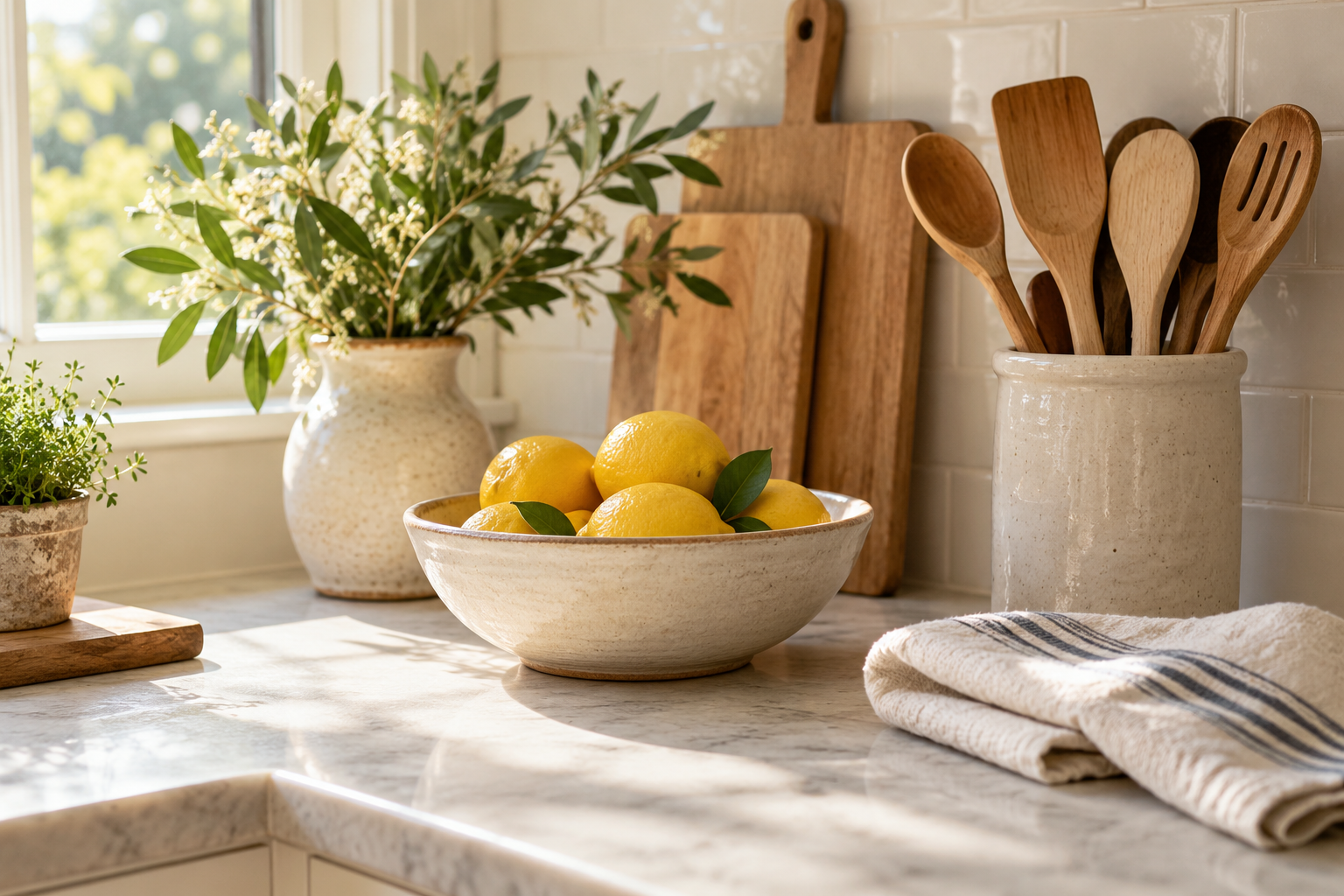
Rather than choosing between bare and busy, think of the counter as working space with a few permanent guests. Each object should have a reason to stay. That reason might be frequent use, difficult storage, or simple enjoyment. A bowl of lemons can belong there because you like seeing it. The important part is that the bowl still leaves you somewhere to put a chopping board.
Begin with a meal you make often
Imagine preparing one familiar dinner from beginning to end. Where do ingredients land? Where does the chopping happen? Where do you put a serving bowl while filling it? The answers reveal the working areas that need to remain available. Protect those areas before deciding where the decorative objects or appliances should go.
If your kitchen has only one useful preparation patch, make it easy to clear. A tray holding a few frequently used items can move together, whereas scattered objects each need individual handling. Try the arrangement with your largest everyday board or mixing bowl. A counter can appear clear while lacking a continuous area large enough for the tool you actually use.
Look at the corners too. A corner may suit an object you reach for occasionally because it is less convenient for chopping. However, placing something there can make its cord, lid, or handle awkward. Test the whole movement: pulling it forward, opening it, using it, and putting it back. An appliance’s resting position is only part of the space it requires.
Give frequent use an honest definition
Notice which objects you touch during an ordinary week. A kettle used each morning has a different claim on the counter from a blender used once in a while. That does not automatically mean the blender should go in a cupboard. It means you can consider the trade-off clearly rather than keeping it out because appliances are conventionally displayed in kitchens.
Weight and storage shape matter. A heavy object may be uncomfortable to lift from a low cabinet, while a lightweight utensil container can move easily. The best arrangement balances reach, space, and the actual handling involved. You can keep a less frequent but awkward object accessible and tuck a smaller daily item in an easy drawer if that works better.
Watch out for aspirational appliances. Leaving something visible may remind you that you hoped to use it, but it also asks for space every day. Try giving it a specific occasion instead. If you enjoy using it then, decide where it belongs afterward. The counter need not function as a permanent reminder of every cooking project you might someday begin.
Store utensils near their work
A pot of wooden spoons can be handy beside the cooking area, provided it does not crowd the place where pans need to go. Include the utensils you reach for regularly and put duplicates or occasional tools elsewhere. A container packed too tightly makes choosing one spoon a two-handed job. Leave enough room that the tools can be lifted out individually.
The same principle applies to coffee supplies, tea things, or a small baking setup. Grouping related objects reduces the distance between steps. Keep the group compact enough that it does not spread simply because another matching accessory exists. A useful collection might consist of a kettle and two canisters, rather than an entire corner devoted to a drink made once each day.
Try resisting a label for every zone. The kitchen can be understandable without turning into a diagram. Put objects beside the actions they support, then see whether the arrangement feels natural. If a group keeps breaking apart because one member is always needed elsewhere, split it. Your movements are more important than preserving a tidy category.
Treat the visual objects as real occupants
There is room for pleasure on a practical counter. A ceramic bowl, a plant suited to the location, or a favorite small dish can make the kitchen feel personal. Choose a limited number and give them intentional places. The useful question is whether you enjoy them enough to move or clean around them, rather than whether decorative objects are permitted at all.
One fairly substantial object can be easier to live with than many tiny ones spread along the backsplash. A bowl can hold fruit and remain easy to pick up. Several small ornaments may collect around the preparation area without providing a clear arrangement. This is not a rule about style; it is a way to notice the practical demands of the things you choose.
Be alert to unrelated objects arriving from elsewhere. Keys, letters, chargers, and bags often settle on the nearest horizontal surface. The kitchen can become their home by default. A more deliberate landing place for everyday objects may free the counter more effectively than reorganizing kitchen equipment yet again.
Try a temporary clear-out
Choose one section rather than emptying the whole kitchen. Move everything from that section to a nearby table, restore the useful working space, and return only what you expect to use soon. Keep the remaining objects accessible during the trial. You are gathering information, not committing to an irreversible minimalist transformation.
Over the next few days, notice what you fetch. Something retrieved repeatedly may deserve to come back. Something you do not miss can find a different place. Also notice whether you actually use the newly clear space. If it has no practical purpose, you may reasonably prefer to put a favorite object there. Empty space is valuable because of what it makes possible, including a pleasing view.
A thoughtful counter will change as the household changes. More baking, fewer packed lunches, or a different morning routine can shift its priorities. Revisit the arrangement when you notice repeated friction. Keep enough room to make the meal, keep useful objects where they can help, and let the rest of the kitchen support the work instead of competing with it.