The front door opens onto a very small household drama. Someone is carrying a bag, someone needs to remove shoes, a coat is sliding off an arm, and the keys have become impossible to find inside a hand that was holding them a moment ago. An entryway has to cope with this sequence before it can do much else.
That remains true whether you have a hall, a narrow corridor, or a front door that opens directly into the living room. The most useful arrangement begins with the movements of arriving and leaving. A decorative console may be lovely, but it cannot substitute for somewhere to put the bag while you close the door. Start there, with the objects and the order in which they arrive.
Watch one arrival from start to finish
Next time you come home, notice what you are trying to do simultaneously. Where does your hand want to put the keys? Which item ends up on the floor first? Does a coat need to travel through the room before reaching a hook? You are looking for the moment when an ordinary action has no obvious place to happen.
Write down the few things that cross the threshold most days. They may include shoes, a work bag, a jacket, keys, shopping, and an umbrella. Avoid beginning with an inventory of everything that could ever enter the house. The entryway should handle repeated arrivals first. A suitcase used occasionally does not need the best patch of floor beside the door.
If several people share the space, compare their routines. One person may bring a bicycle helmet, another a tote bag, and another a small mountain of school materials. A single beautiful basket can fail because it treats unlike objects as one category. Give the main belongings destinations that are understandable to the people using them, including anyone who cannot reach a high shelf.
Keep the door’s working space clear
Open the door fully and look at the floor it needs. Furniture should not make that movement awkward or create a narrow sideways passage into the room. A shallow shelf may fit where a console would intrude. A wall hook may be more useful than a standing rack with wide feet. The right storage has to coexist with people moving through the space.
Think about more than the visible footprint. A chair looks small until someone sits and needs room for their knees. A drawer needs space to open. A row of coats can project farther from the wall than an empty hook suggests. Test the arrangement with the things in place, not only with the furniture freshly cleared.
If the door opens into a shared room, a slight change in arrangement can establish an arrival area. A small surface close to the entrance, a clear shoe spot, or a hook near the path can be enough. You do not need to manufacture an architectural hall with furniture that overwhelms the room. Let the entrance be a useful part of the space you have.
Solve the first handful of objects
Keys need a place that is easy to reach when arriving and easy to check when leaving. A shallow dish, a little hook, or a particular drawer can all work. Choose according to how you move. If keys repeatedly land on the console despite an assigned drawer elsewhere, the console is providing useful information about the natural route through the house.
Bags need something that suits their shape. A sturdy hook may hold a tote well but leave a structured bag swinging into the walkway. A shelf or bench can be more practical for that bag. Avoid stacking bags in a way that requires removing two to retrieve one. Give the everyday bag a direct place, and store occasional ones elsewhere.
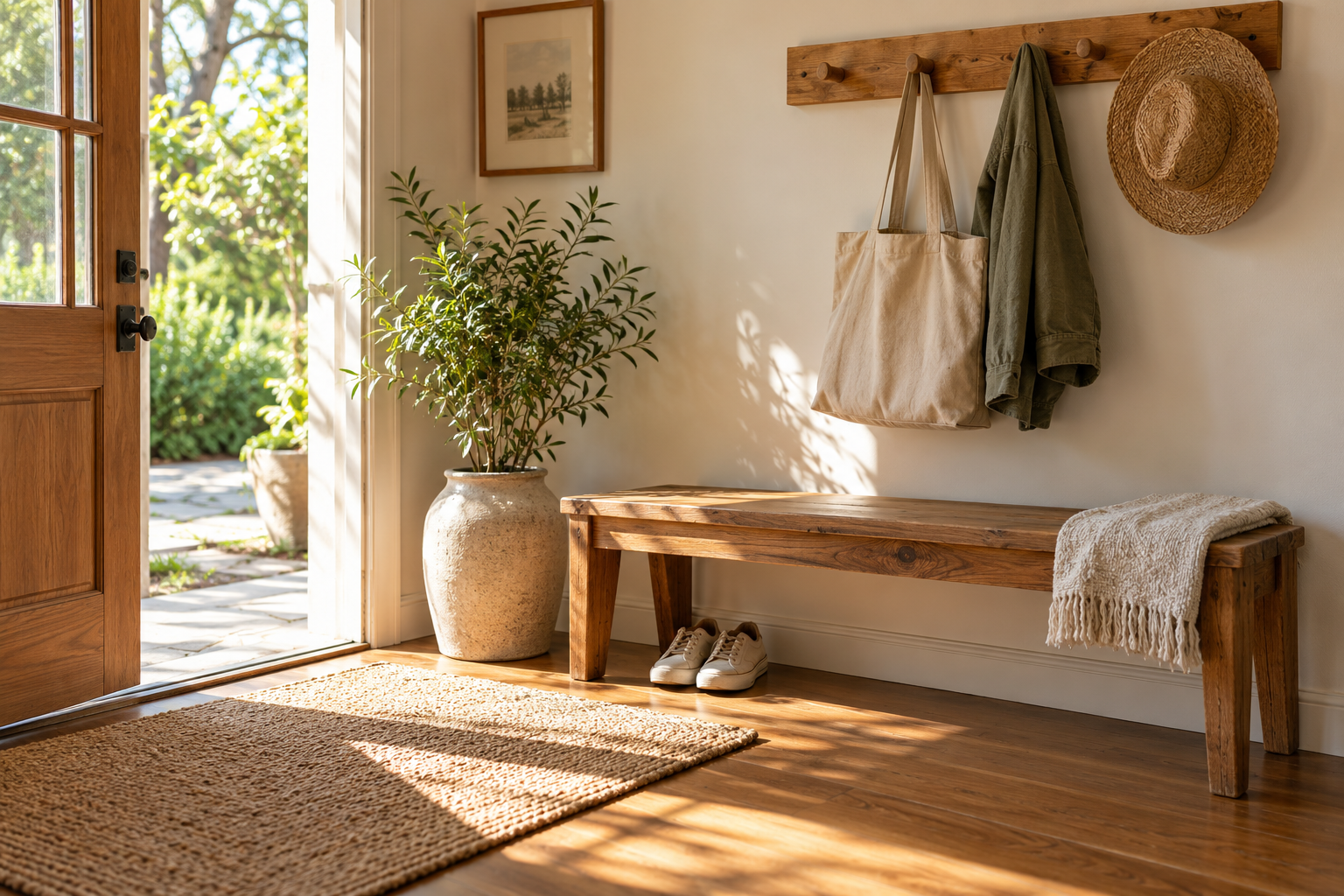
For shoes, decide which pairs really belong by the door. Keeping every pair there turns a departure space into a wardrobe. A tray, shelf, or section under a bench can hold the pairs currently in use, with a clear limit set by the available space. The limit is a physical fact rather than a rule about how many shoes anybody should own.
Give temporary things an exit
Mail, returns, borrowed books, and objects waiting to go to the car can take over an entrance because they are between destinations. Set aside a small departure spot, separate from the keys and other things that return every day. A bag or shallow basket can work if its contents stay visible enough to remember.
Name what belongs there. “Things leaving the house on the next trip” is more specific than “miscellaneous.” Then make checking that place part of leaving. If an item has sat there through several outings because it cannot actually leave yet, move it to a more suitable place. The entryway should not hold every unresolved household decision.
The approach in giving everyday objects a home can help distinguish permanent places from temporary landing spots. Both are useful, but they do different jobs. A book you are returning to a friend should not need the same kind of storage as the gloves you wear every morning.
Make the arrangement easy to restore
A practical entryway should look understandable even when it is in use. One jacket on a hook and shoes under a bench are signs that the system is working. Do not judge it by whether it stays visually empty. Instead, ask whether the floor remains passable and people can find what they need without searching through a heap.
Occasionally remove the things that no longer belong to the current routine. Seasonal changes, a different commute, or a new bag can all alter what the entrance needs to carry. A quick review is more useful than maintaining storage for habits the household has stopped having.
The aim is an easier arrival, not a formal first impression. When the door closes, you should be able to put things down, move into the house, and return later to find them. A modest bench, a few well-placed hooks, or a plain dish can accomplish that. The best arrangement is the one you stop noticing because coming home no longer requires solving the same small problem every day.