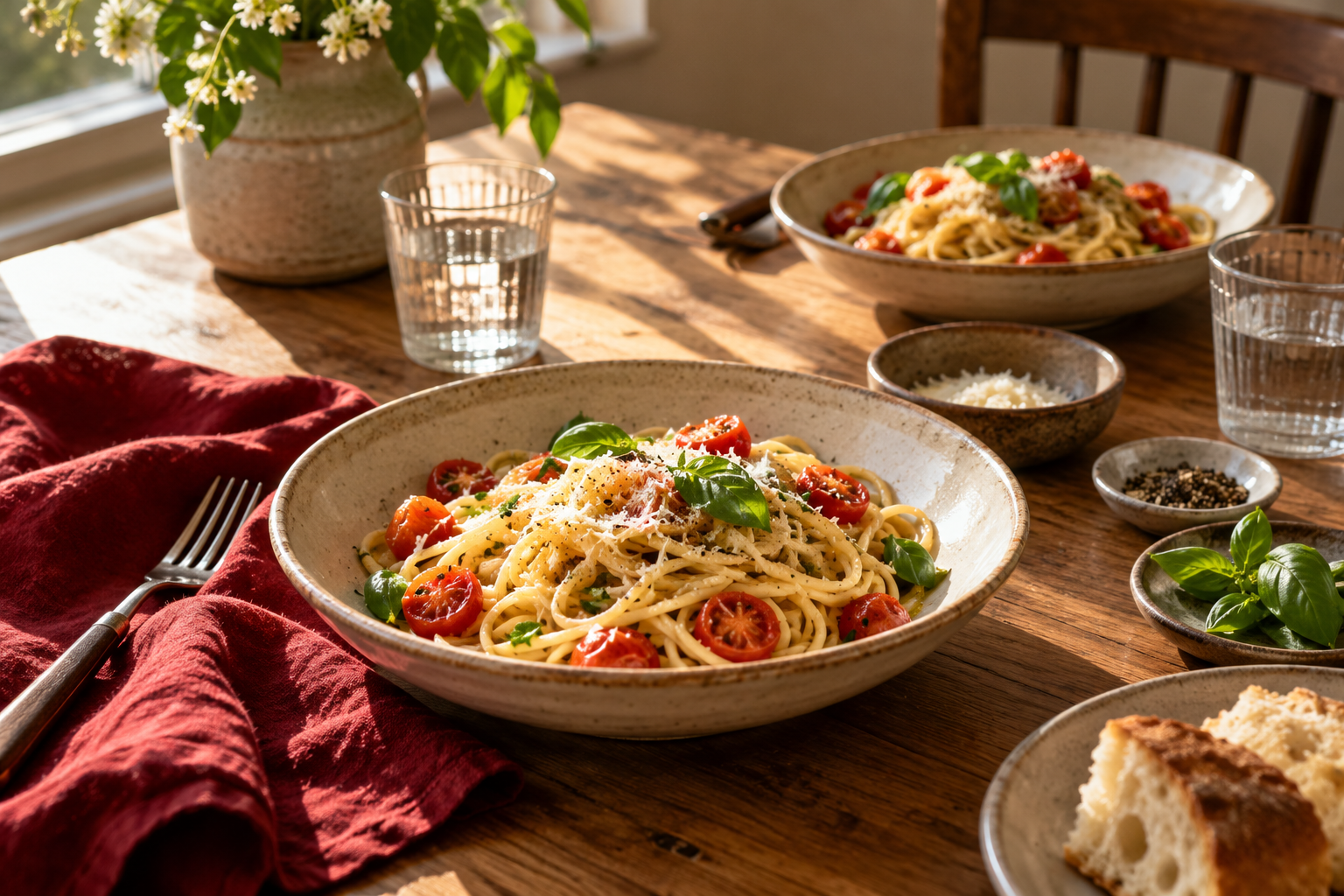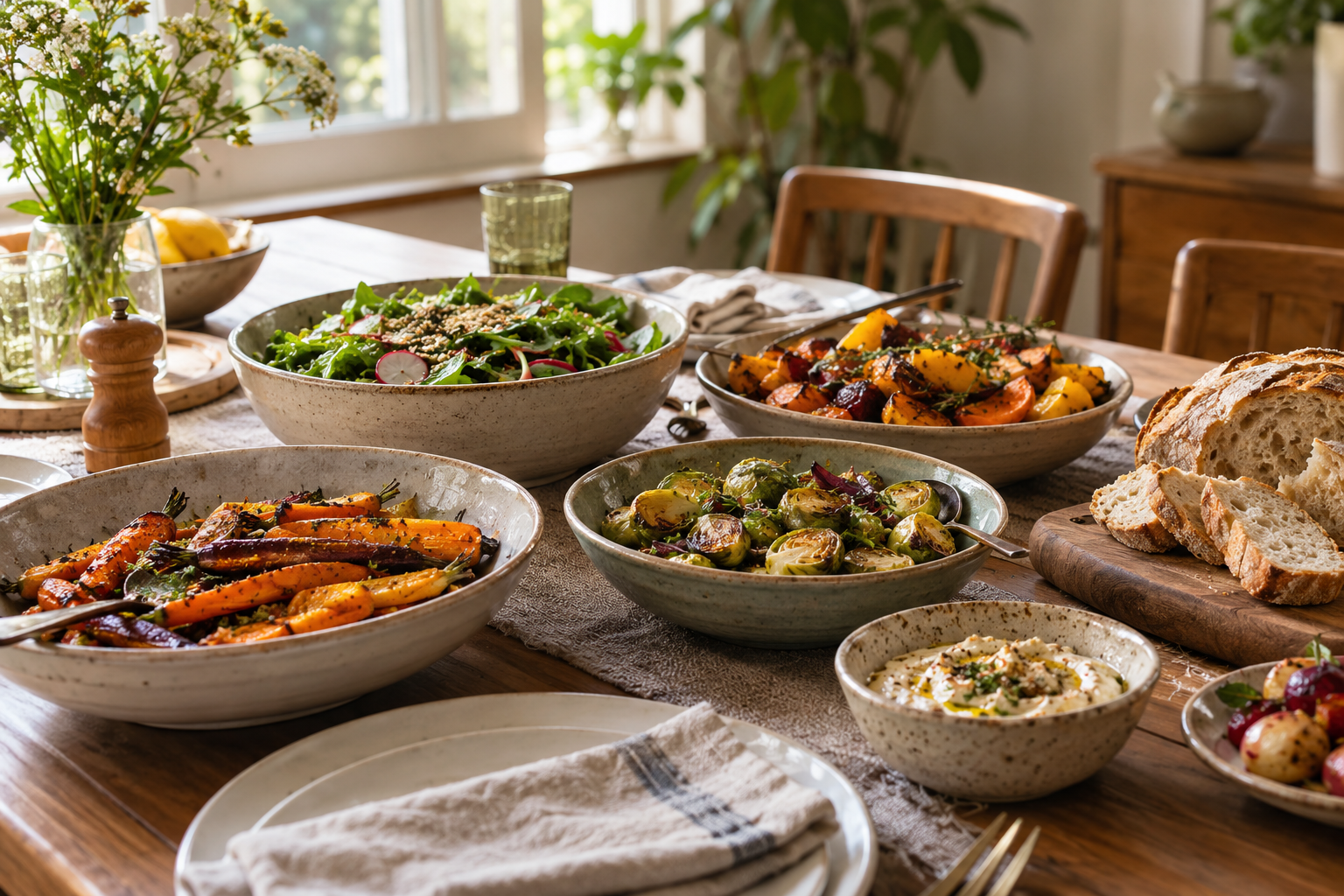
A potluck begins with a generous idea: everyone brings something, and the meal belongs to the group. It becomes complicated when the host quietly takes responsibility for making all those contributions look like a coordinated menu. Suddenly there is a spreadsheet, a missing category, and the suspicion that somebody should make a second main dish just in case.
The invitation can be simpler than that. People are coming to eat together. Your job is to make the gathering understandable and give the food somewhere to go. A little coordination helps. Trying to eliminate every possible irregularity usually produces a more demanding event than the one you meant to host.
Send an invitation that answers ordinary questions
Include a day, an arrival time, and an idea of when you expect to eat. Tell people whether the meal will be seated, buffet-style, indoors, or in a garden. Those details help guests choose something that travels and serves comfortably. “Bring something to share for a casual lunch around the kitchen table” says more than a long list of vague promises about a relaxed afternoon.
Ask about dietary requirements early enough to make practical arrangements. Guests should have a straightforward way to describe the ingredients in what they bring, using packaging information where relevant. Do not assume that a dish meets someone’s requirements because it looks familiar. Direct information is more useful than reassurance offered on another person’s behalf.
Give people permission to contribute in different ways. A loaf of bread, fruit, a bought dessert, or drinks can be welcome alongside homemade food. Someone who does not enjoy cooking should not need to invent an excuse. You can say explicitly that purchased contributions are fine, then behave as though you mean it when people arrive.
Coordinate the outline
Choose one broad approach to the menu. You might supply a central dish and invite accompaniments, or ask people to choose among a few loose categories. Another option is to let a small group say what they are thinking of bringing in the same message thread. The aim is to avoid obvious duplication without assigning everybody a tightly specified recipe.
Decide what you want to contribute yourself before filling any gaps. It is easy for the host to become responsible for the centerpiece, a salad, spare dessert, and every drink. Pick a manageable role. If the menu later looks uneven, ask whether the imbalance matters. Two potato dishes and no elaborate starter can still make a perfectly pleasant shared lunch.
Keep serving expectations clear. If a dish needs particular equipment or last-minute attention, ask the guest to discuss it with you beforehand. The kitchen may not have room for several people preparing food at once. Knowing that ahead of time allows somebody to choose a different contribution without embarrassment at the door.
Prepare a place for arrivals
Clear one surface where incoming dishes can land. Keep it separate from the place where guests will immediately put bags, coats, and glasses. A table that has room for food at the beginning often becomes crowded remarkably quickly. You can point someone to the landing area while greeting the next arrival instead of carrying every bowl through the house yourself.
Have serving utensils available, but invite guests to bring the ones their dishes need. A broad spoon, tongs, and a cake server do different jobs. There is no need to buy a matching collection; the useful thing is that each dish can be served easily. Keep extra utensils nearby so an unsuitable spoon can be exchanged without a search through drawers.
Agree on a way to identify dishes and ingredients. A small card beside a bowl can be helpful, and a guest can also explain directly what they brought. Make it easy to ask questions. If a contribution is unfamiliar, curiosity is more welcoming than guessing its name or joking about whether anyone will eat it.
Make serving understandable
For a buffet, arrange plates near the start and leave a clear place for people to put a plate down when they need both hands. Avoid creating a narrow bottleneck between two pieces of furniture. Drinks can live on another surface so someone refilling a glass does not interrupt the line of people serving food.
A seated potluck needs a different arrangement. Consider which bowls can stay on the table and which should remain on the counter. A welcoming small table often depends on moving some serving duties elsewhere. People should be able to pass a dish without first building a tower of glasses and napkins.
Explain the arrangement in a few friendly sentences when it is time to eat. Tell people where plates are, invite them to help themselves, and mention where questions about ingredients can be answered. Avoid narrating every dish as though presenting a formal tasting menu. Guests can discover the food and talk to one another as the meal unfolds.
Resist hosting every conversation
Once people have a drink and know where to put their food, you can participate in the gathering. Introduce guests who have not met and give them a useful connection if one comes naturally. Then let conversation develop. You do not have to keep every group equally animated or prevent every pause.
If you want something to do together after eating, keep it optional and easy to join. A short walk, a familiar game, or passing around a book can work without becoming an announced program. Equally, a potluck can consist of eating, sitting, and talking until people feel ready to leave. The absence of a second activity is not an empty space that must be filled.
Give the evening a practical finish
Before the gathering, decide where used dishes will collect and how guests will recognize their serving bowls. A discreet piece of removable tape underneath can distinguish similar dishes. Ask people to take responsibility for their own containers rather than leaving you a collection to identify later. If someone offers help with clearing, give them one finite task.
Leave room for the menu to have been a little peculiar. Perhaps dessert was especially abundant, or everyone wanted the same bread. Those are ordinary features of a meal made by several households. Keep the arrangements that made people comfortable, simplify anything that made you hover, and let the next invitation be an invitation again rather than a proposal for a more perfectly managed event.