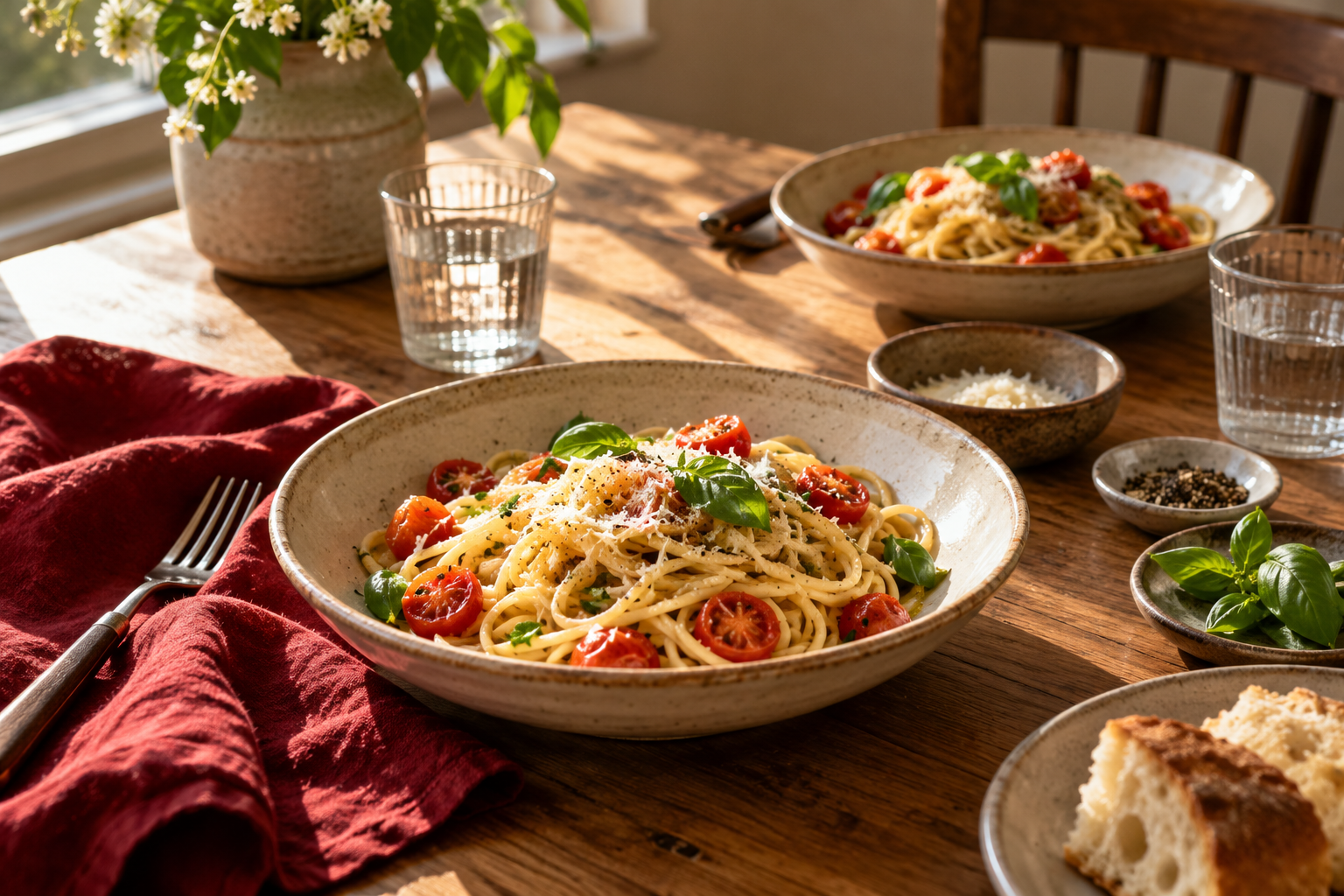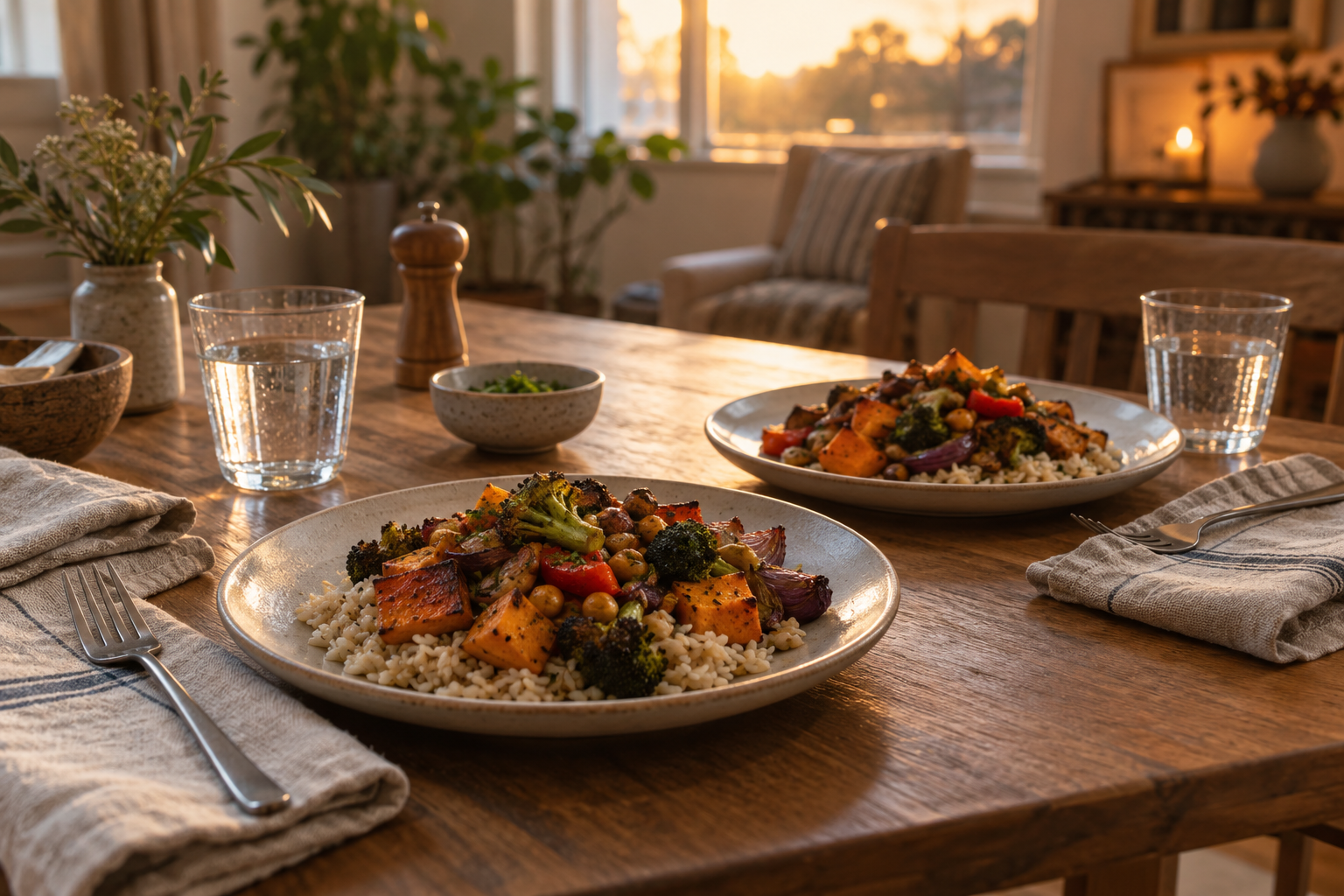
The phone is on the table because it was in a hand a moment ago. Someone was checking an arrival time, choosing music, or answering a message before the food was ready. Then dinner begins around it. Every small pause offers an opportunity to pick it up again, even when nobody particularly wanted to spend the meal looking at a screen.
A phone-free meal does not need a dramatic announcement or a basket at the door. It can begin as a modest invitation: shall we put these aside while we eat? The wording matters because a meal shared with other adults is a shared occasion. An invitation gives people room to explain what they need and agree on something workable.
Start with one meal, not a new household law
Choose an occasion that already has some room around it. A rushed breakfast before different departures may be a poor first experiment. A simple dinner when everyone is home could be easier. You are deciding how to spend this meal, not writing a policy that will govern every sandwich eaten in the building.
Mention the idea before people sit down. “I’d like to have dinner without checking messages tonight. Would that work for you?” is clear and limited. It also lets someone say they are expecting an important call. Avoid presenting the proposal as a correction aimed at the person who uses their phone most visibly.
If the answer is mixed, find a smaller agreement. Perhaps phones stay nearby but face down, or everyone checks necessary messages before eating. Perhaps the first few minutes are screen-free and the rest is flexible. A partial agreement that people choose is more hospitable than a rule that makes one person responsible for monitoring everyone else.
Choose where the devices will go
Putting a phone just beyond the plate leaves it available for every gap in conversation. Try a shelf, a bag, or a counter within reach of anyone who needs it. Nobody needs to surrender possession of a personal device. The practical aim is to give hands and eyes somewhere else to settle during the meal.
Keep essential access available. A person waiting for a call from a family member, using a device for communication, or managing a work responsibility may need a different arrangement. Ask what works rather than demanding an explanation in front of everyone. Phone-free is a description of an experiment, not a standard for whether someone is participating properly.
Deal with other practical uses in advance. Choose the music before sitting down. Look up the train time before the food arrives. If someone wants a photograph of the table, they can take it and put the phone away again. Ordinary exceptions do not invalidate the occasion. They simply keep a useful idea from becoming rigid.
Let conversation be ordinary
Once the devices are out of view, the table does not suddenly require dazzling conversation. Ask something answerable: what did you notice on the way home, what are you looking forward to cooking, or which part of the day went differently from the plan? A question about something specific is often easier to enter than a demand to summarize an entire day.
Let people answer briefly. Follow the details they offer rather than moving straight to another question. If somebody mentions a dog they saw, the conversation may become about neighborhood dogs. That is an entirely acceptable dinner conversation. There is no need to turn a shared meal into a meaningful discussion with a visible outcome.
Silence can remain part of the table, too. People may be hungry, tired, or simply enjoying the food. You do not have to repair every quiet moment with a prompt. Pass a dish, take a drink, and allow the next subject to arrive. Removing a screen makes space; it does not create a duty to fill that space continuously.
Arrange the meal so it is easy to join
A complicated dinner can keep the cook moving between the table and the kitchen. Choose food that can be served without many last-minute steps, or bring the remaining dishes over before inviting everyone to sit. If you need ideas for reducing that bustle, a less rushed weeknight dinner starts with the practical sequence of the meal.
Comfort matters more than ceremony. Make room for elbows and put commonly needed items within reach. Let people know if they should serve themselves or pass a dish. A table that is easy to use allows attention to stay with the people at it without requiring everyone to behave as though they are guests at a formal event.
If you eat alone, try the same experiment without adding imagined company. Put the phone elsewhere and notice the meal, the room, or the view through the window. You might prefer music, a book, or no other activity at all. A meal by yourself can have its own character; it need not imitate a dinner party to deserve some attention.
End without awarding a score
When the meal finishes, collect plates or move to another seat. The phones can return without commentary. Asking “Did that feel nice?” is enough if you want to discuss trying it again. Avoid counting how often someone glanced at a device or treating an interruption as evidence of failure. That would make the next invitation less appealing.
If the experiment felt awkward, change the conditions rather than assigning blame. Try a shorter meal, fewer people, or a different time. You may discover that a screen-free breakfast works better than dinner in your household. You may decide occasional meals are enough. The point is to choose a little time together that everyone can actually enjoy.
A phone-free meal succeeds when it feels like a meal, with all its ordinary passing, spilling, talking, and pauses. The devices have somewhere to wait. The people have somewhere to be. Nothing more elaborate is required.