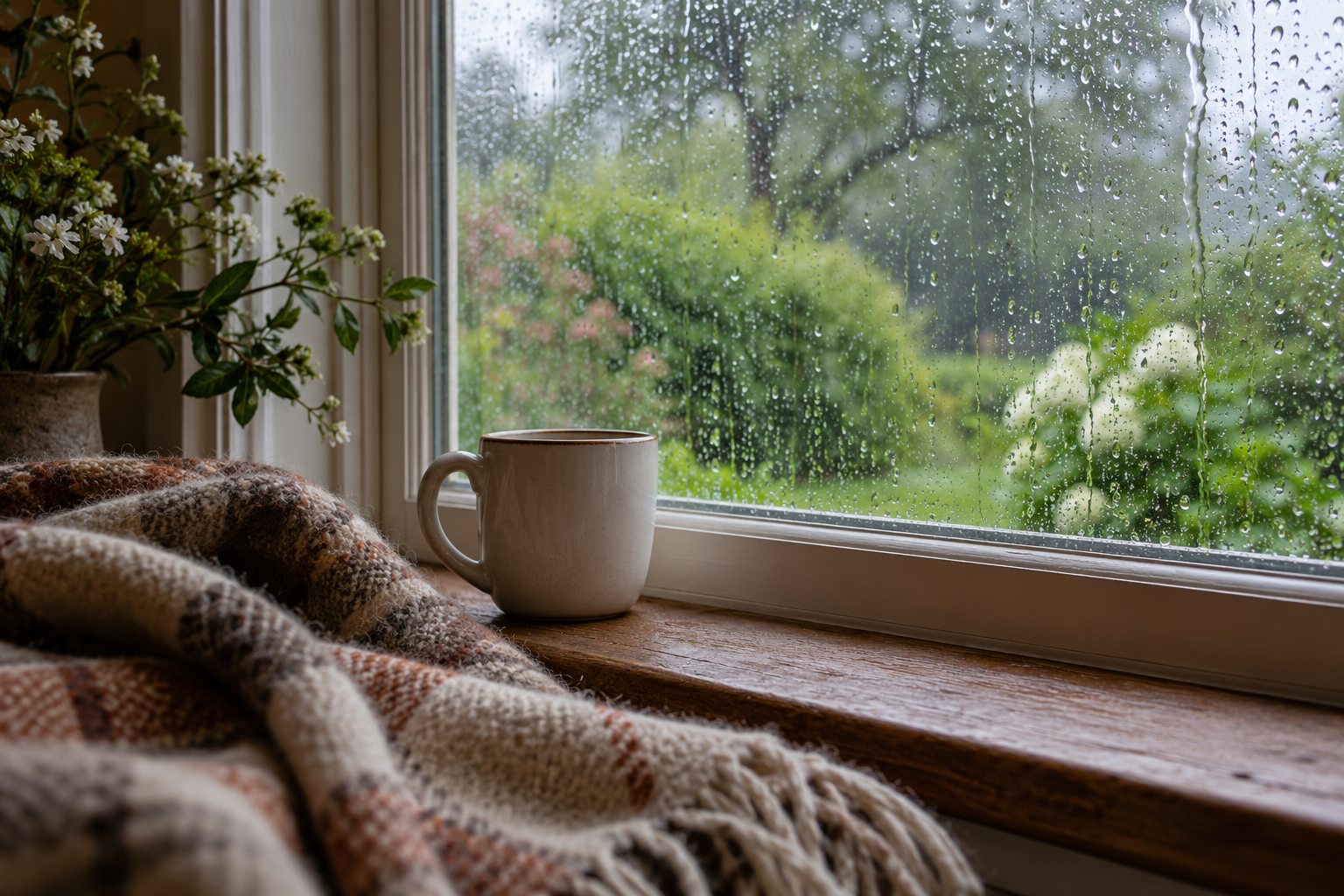
Rain changes the outline of an afternoon. The walk becomes less appealing, the outdoor plan disappears, and the room seems to ask what you intend to do now. It is easy to respond by constructing a replacement day: bake something ambitious, reorganize a cupboard, finish a book, and emerge from the weather with visible achievements.
There is another option. Let the afternoon become smaller. Choose something that suits being indoors and give it enough space to be enjoyable. A rainy afternoon does not have to become a memorable occasion, and it does not need to pay you back for the plan that changed. It can contain a few ordinary pleasures and an unfinished activity.
Begin with the room you are in
Before choosing an occupation, make a small part of the room usable. Move yesterday’s bag off the chair. Bring a lamp nearer if the window light has faded. Put a cup on a stable surface rather than balancing it beside the cushions. These are practical adjustments, not the beginning of a full cleaning session.
Decide whether you want company, quiet, or a mixture. In a shared home, a simple question can prevent mismatched expectations: is this a reading afternoon, or does anyone feel like a game? People can want different things without separating for the whole day. One person might read at the table while another works on a small project nearby.
If the room is already comfortable, leave it alone. There is no rule that leisure must be preceded by arranging blankets and lighting candles. The setting should support what you want to do. It does not need to resemble an illustration of a rainy day before you are allowed to enjoy it.
Choose an activity with a low doorway
Look for something you can begin without an expedition for supplies. Read a chapter from a book already on the shelf. Draw one object. Mend a loose seam if you know how. Put on an album and listen from the beginning. The ease of starting matters more than whether the activity sounds distinctive when described.
A low doorway does not mean a trivial experience. You might spend a long time reading after beginning with one chapter, or become absorbed in a drawing you expected to abandon. The small beginning simply keeps the afternoon from depending on an elaborate preparation that uses up the interest before the activity starts.
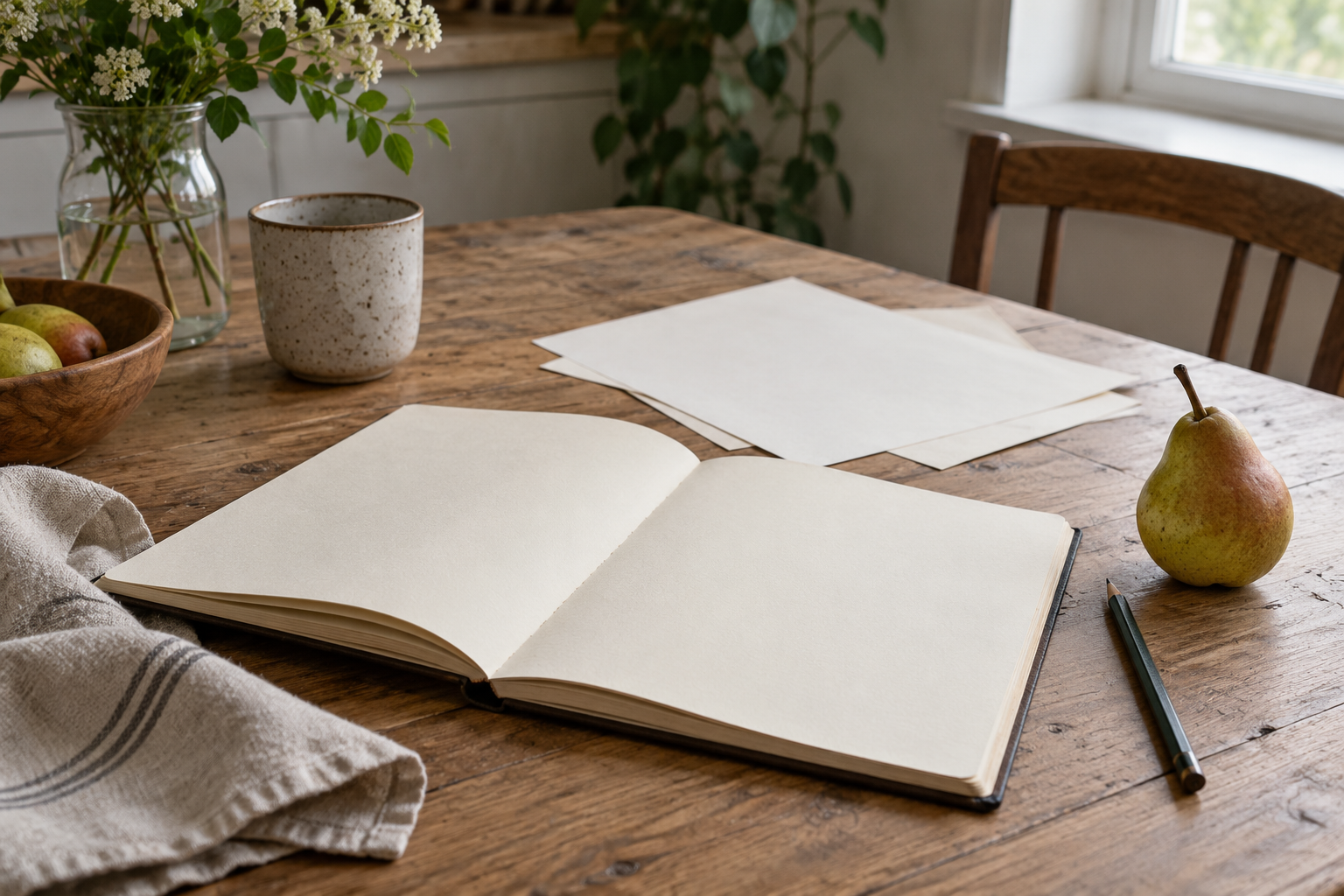
If you want a creative option, sketching ordinary things needs little beyond a pencil and paper. You can also write a description of what you see through the window, arrange a few photographs, or make a paper bookmark. Choose one. A menu of possibilities is helpful only until it prevents you from selecting anything.
Try a finite, slightly neglected task
Some people enjoy a practical job on an indoor afternoon. The distinction is whether the task has a satisfying edge. Sewing on one button is finite. “Sort out all my clothes” is not. Testing a few pens and discarding the empty ones can be pleasant; emptying every drawer onto the floor creates a commitment to the rest of the day.
Choose a task that leaves the room usable if you stop early. Put the contents of one small box on a tray rather than spreading an entire collection across the table. Work on a handful of photographs rather than opening every archive. A contained setup makes it easier to stop when the activity stops being enjoyable.
Do not assume that a practical afternoon is morally better than a leisurely one. Folding clothes while listening to something may be exactly what you want. So may lying on the sofa with a book. Neither choice needs a defense. The weather has changed your available options; it has not assigned you an obligation to improve the household.
Give shared time a simple shape
A game, a shared meal, or taking turns choosing music can provide a common activity without requiring constant conversation. Use what is already available and agree on the scope. One round of a game can be enough. A simple lunch can be assembled together without becoming a cooking competition.
If children are involved, start with materials and activities that suit their ages and abilities, and keep the setup manageable for the adults present. Drawing at the same table or building something from familiar toys may be easier than introducing a complicated new project. There is no requirement for the afternoon to produce a keepsake.
Keep an alternative available for anyone who wants to step away. Reading nearby still counts as sharing a room. Company does not have to mean identical participation throughout the day. The afternoon can alternate between conversation, separate occupations, and something together when everybody feels like joining again.
Leave room for a pause
At some point, stop choosing. Look at the window, make another drink, or sit without doing much. You do not need to label the pause or explain its purpose. It is simply part of the time available. If a book is not holding your attention, close it. If the game has become dull, put it away.
A short pause can also reveal what the rest of the afternoon needs. Perhaps you are hungry. Perhaps the room feels stuffy, or another person wants a turn at the table. Attend to that concrete need before searching for a more exciting activity. Ordinary comfort often does more for the next hour than adding another option.
When evening approaches, clear enough of the activity to make the next part of the day easy. Put the pencils back in the cup or leave a bookmark where you stopped. You need not finish the picture, the book, or the sorting. A rainy afternoon can end with something waiting for another time, and with nothing particular to show anyone. It was still an afternoon well available to you.