A small balcony can become storage almost without anyone deciding. A spare chair arrives, a plant pot joins it, something waiting to be carried downstairs stays for a week, and the door begins to open onto a collection rather than a place. Making it feel like another room starts by asking what you would like to do there for an ordinary part of an ordinary day.
Choose something modest. You might want to drink a morning coffee, read a few pages, or sit outside while talking to a friend. A narrow balcony may be excellent for one of those activities and frustrating for all of them at once. Giving it a main purpose helps you choose the objects that make that purpose possible and leave out the ones that merely suggest a fully furnished outdoor lifestyle.
Notice the balcony before furnishing it
Spend time by the open door or on the balcony at the hours when you expect to use it. Look at where the light falls, which parts feel sheltered, and how the surrounding buildings affect the view. A spot that looks appealing in a photograph may be the least comfortable place to sit. Your own pattern of use is the relevant starting point.
Check the building’s rules and the requirements that apply to your particular space before adding fixtures, screens, heavy planters, or anything that hangs beyond the railing. Those details vary, and a general decorating idea cannot settle them. Keep access, doors, and any required routes clear. If an idea needs uncertain structural assumptions, choose a simpler arrangement while you establish what is allowed.
Look at the floor and the door’s movement. You need space to step out and turn, not just space for objects to fit when viewed from above. A chair may leave enough width on paper but make the handle awkward to reach. Test the path with existing furniture before buying something specifically for the balcony.
Furnish the moment you chose
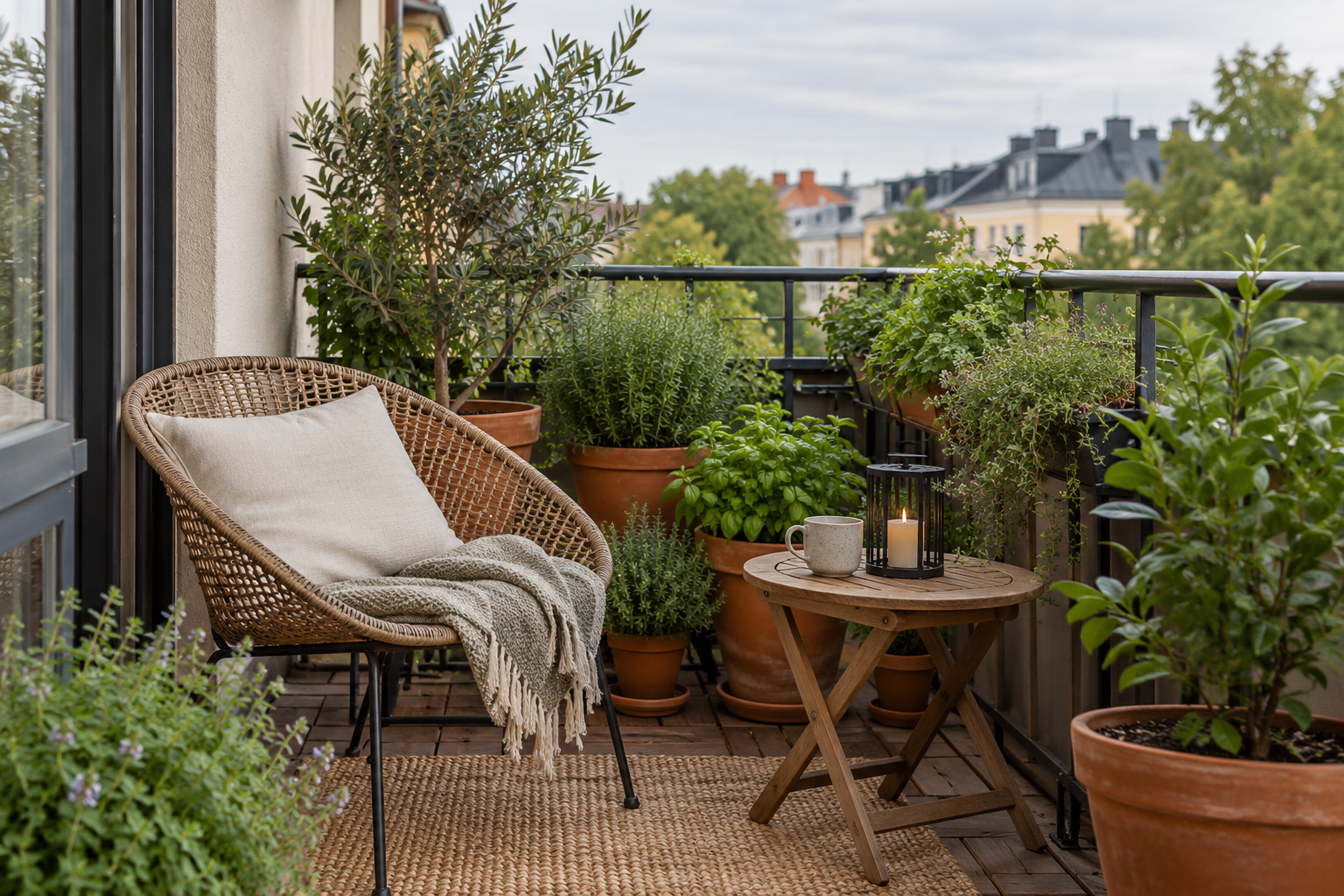
For a quiet reading spot, start with one seat and a small, stable place for a cup or book. For conversation, two compact chairs may matter more than a table. If growing plants is the main pleasure, reserve the best accessible area for them and keep the seating arrangement modest. The purpose determines the layout, rather than the other way around.
Try an existing chair temporarily if it is appropriate for the conditions, then bring it back inside. This gives you useful information about seat height, the view, and how much room you need to move. Furniture intended for indoor use should not be assumed to tolerate outdoor weather, but a brief supervised trial can help you understand the arrangement before choosing permanent pieces.
Folding furniture can be convenient when you genuinely need to clear the space. Consider where it will go when folded. A folding table leaning against the door is not an improvement over a small fixed table that fits comfortably. The useful question is whether the furniture is easy to live with through the whole cycle of setting up, using, and putting away.
Let plants create an edge
A few plants can make the boundary of the balcony feel considered. Choose them according to the conditions you observed, the care you are willing to provide, and the space available for the mature plant. A label’s care information or advice from a knowledgeable nursery can help with specific choices. Avoid selecting a whole collection solely because the pots look good together on the day you buy them.
Place pots where you can reach them comfortably for watering and care. A plant tucked behind a chair may turn a small daily task into a furniture-moving exercise. Grouping a few pots can also leave a clearer passage than scattering them around the entire floor. Keep plants and containers securely within the balcony and follow the relevant building guidance for placement.
The pots do not all need to match. Repeated material, a similar shape, or simply a restrained number of containers can hold the arrangement together. Leave room between groups so the balcony still has a usable floor. A little open space can make individual leaves and branches more noticeable than adding one more specimen would.
Borrow softness without building another household job
A cushion can make a seat more inviting if it suits the furniture and you have somewhere to keep it when necessary. A light throw may come outside with you and return indoors afterward. Consider the practical routine before adding several textiles. You want a place to sit, not a daily obligation to rescue fabric whenever conditions change.
A small tray can carry a drink and a book out together. It may be more useful than permanently storing outdoor dishes. A basket just inside the door can hold the few things you like to bring out, provided it does not obstruct the entrance. Borrowing from the house keeps the balcony connected to everyday life instead of requiring a complete second set of belongings.
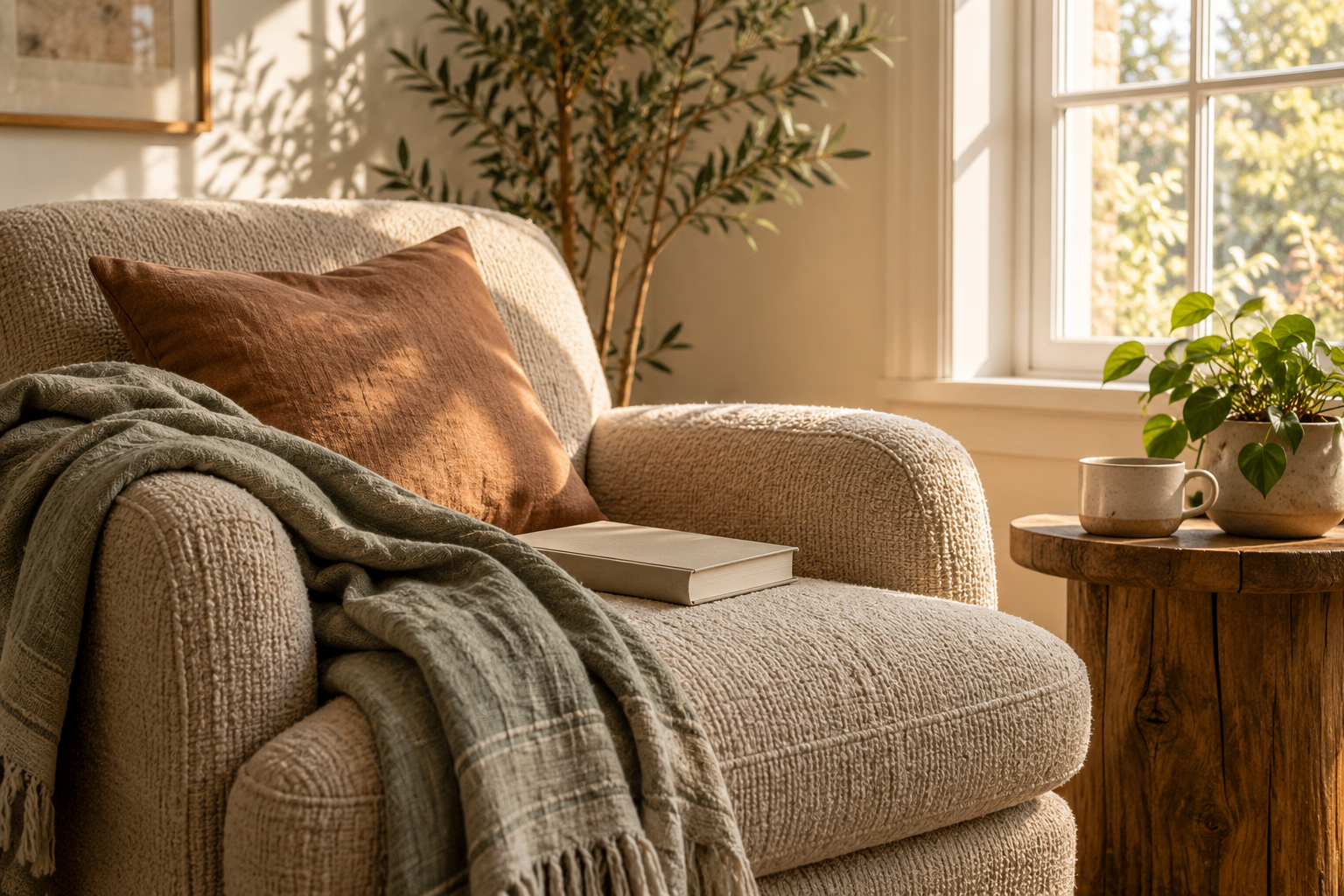
You can apply the same thinking as making a reading corner with existing furniture: identify the seat, the light, and the landing place before layering on atmosphere. The outdoor setting already supplies changing light and a view. You do not need to add many objects to make those things enjoyable.
Keep the threshold easy to cross
The balcony is more likely to be used when stepping outside is straightforward. If every visit requires shifting storage or unfolding an elaborate arrangement, the smallest pause will happen elsewhere. Keep the door area free and put the main seat in a position that is ready for the use you chose, as far as your space and conditions allow.
Notice which belongings begin drifting back outside. A spare box may arrive because there is no decision about where it belongs indoors. Address that decision rather than allowing the balcony to absorb it by default. Occasional practical storage may be necessary, but it should have a deliberate boundary that leaves the living part of the space intact.
After a little while, adjust according to what you actually do. You may discover that the best moment is ten minutes at the end of the afternoon, with one chair turned toward a patch of sky. That is enough of a room: a recognizable purpose, a comfortable place to sit, and a threshold you are happy to cross again tomorrow.