Lunch can disappear into the middle of a day. A message arrives while you are finding a fork, a task remains open beside the plate, and suddenly the break has become another activity performed at the desk. The food may have been perfectly enjoyable. What was missing was a clear moment when work or household duties stopped and lunch began.
You may not have a long lunch hour, a separate dining room, or control over when your break happens. A better lunch break has to fit those facts. It starts with a few choices made before you sit down: what you will eat, where you can put it, and what can reasonably wait until you finish. The point is to make the available pause feel like a pause.
Find out what kind of break you have
Start with the actual shape of your midday. Perhaps you have a predictable period away from a workstation. Perhaps lunch fits between appointments, or happens while a child naps. A plan that assumes a leisurely hour will not help if your day offers a shorter, variable interval. Notice the space you can use without treating it as an inferior version of somebody else’s routine.
Identify which decisions make lunch awkward. Is the problem choosing food at the last moment, finding somewhere to sit, or interrupting a task that does not feel finished? Each suggests a different small adjustment. A complicated meal plan does little for a desk with nowhere to put a plate. A beautiful lunchbox does not decide when you are allowed to close the laptop.
Choose one change for the coming week. You might prepare lunch components alongside dinner, clear one place at the table each morning, or put your break into the day’s schedule. Trying a single change lets you tell whether it actually fits. If the arrangement keeps failing, revise the arrangement instead of assuming you need more resolve.
Make the food easy to begin
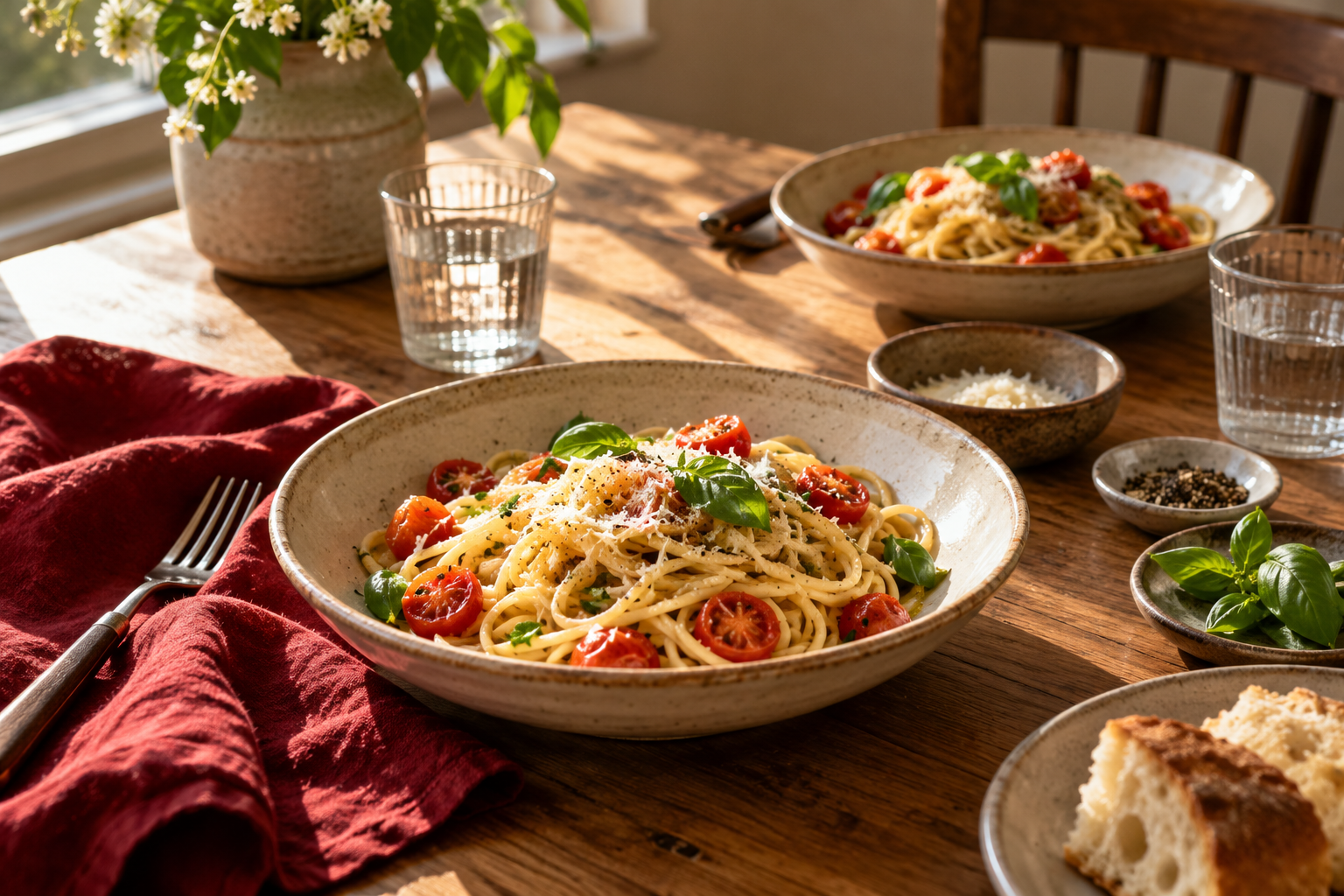
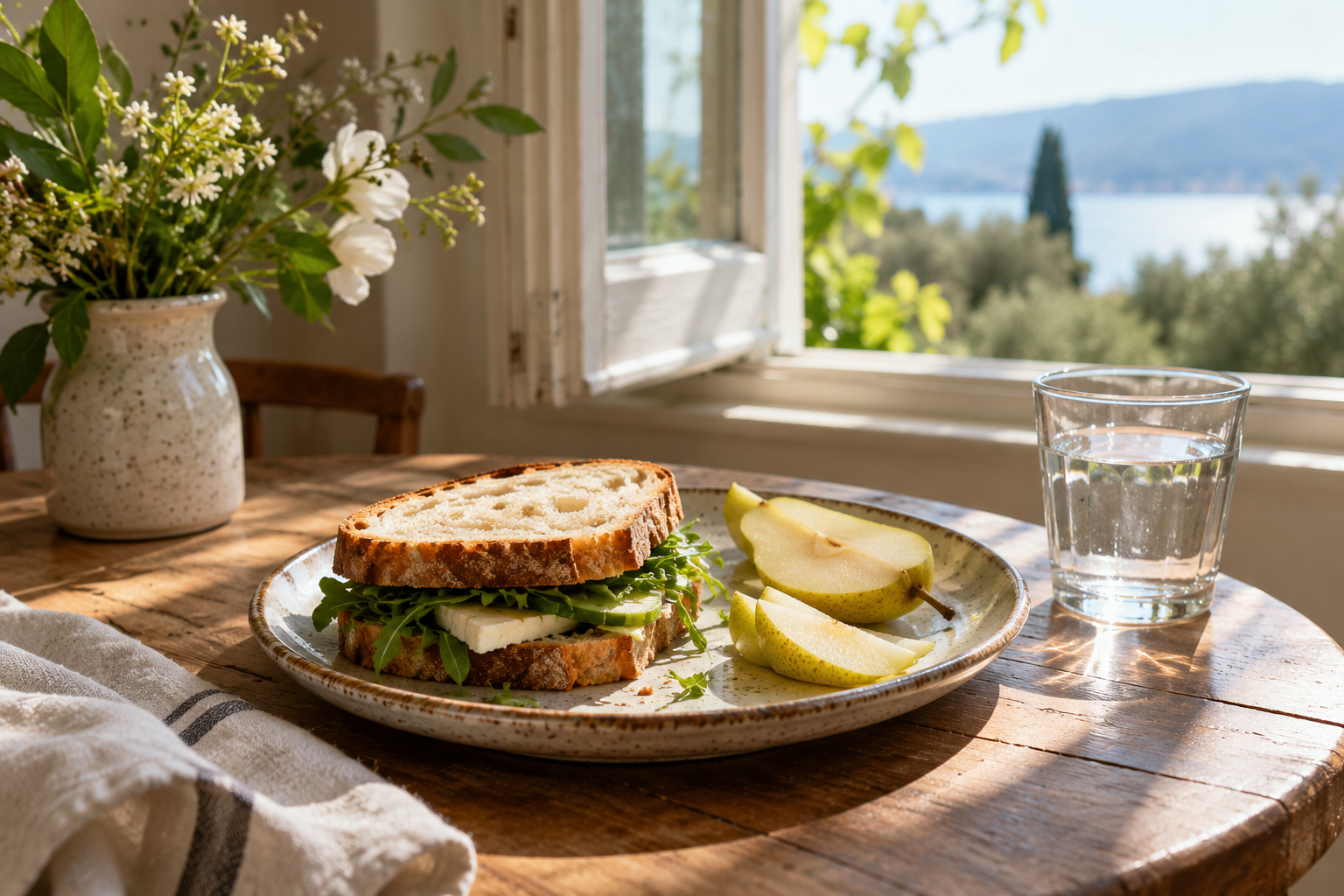
A lunch assembled from familiar components can leave more of the break for eating. Keep the options broad enough to avoid unnecessary rules: a sandwich and something alongside it, a bowl with several ingredients, or a portion of a dish you already enjoy. Choose according to your preferences and practical circumstances rather than an imagined ideal lunch.
If you bring lunch elsewhere, think through the objects as well as the food. Will you need cutlery? Is the container comfortable to eat from, or will you want a plate? Does a sauce need a separate little vessel? Put these together at the same time so the first minutes of the break do not become an expedition through shared drawers.
At home, assembling lunch before the busiest part of the day can be useful, but it need not become a second cooking session. You could simply decide what will be on the plate and move the necessary dishes into reach. A pantry organized around meals you use makes that decision easier because familiar ingredients are visible when you open the cupboard.
Give lunch a physical boundary
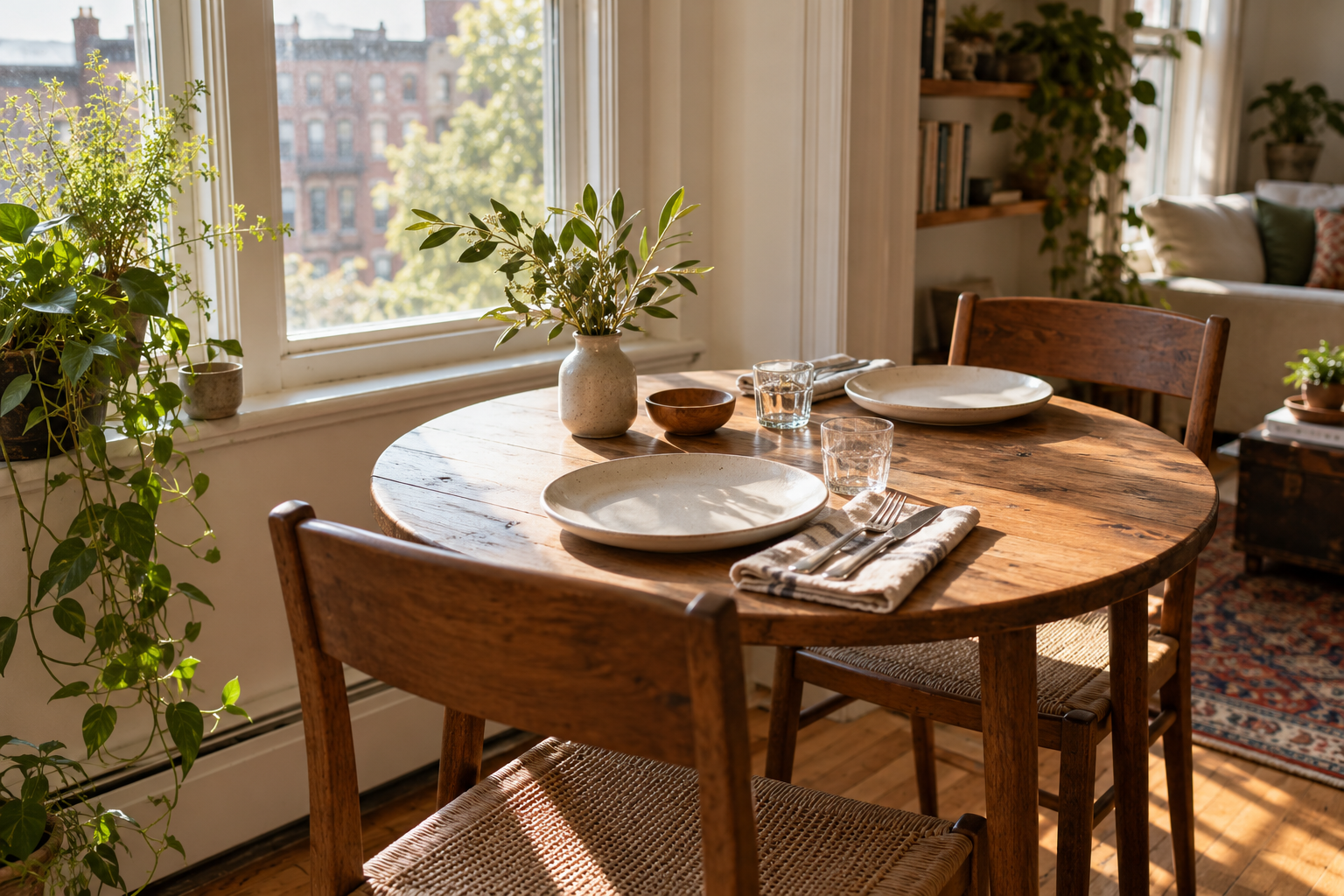
If another seat is available, try moving there. A kitchen chair, a bench outside, or a quiet common area can mark the change without any elaborate ritual. Look for somewhere you can sit comfortably with your plate supported. The best location is one you can actually use on an ordinary day, rather than a picturesque spot that requires a long trip and perfect weather.
When the desk is the only option, change a few things deliberately. Move papers out of the eating area, minimize the document you were using, and put work tools to one side. You do not need to disguise the desk as a dining table. Making a clear place for lunch can be enough to stop it looking like an object temporarily balanced among unfinished tasks.
Keep this boundary easy to reverse. A tray can gather what you need and clear away in one movement. A cloth can cover a work surface if that feels pleasant, but skip it if caring for another object makes lunch more troublesome. The physical signal should serve the break rather than giving you a fresh standard to maintain.
Decide what company you want
Some days lunch is a chance to talk. On others, another conversation feels like a demand. If you share a workplace or household, you can make your preference clear without offering a long explanation. An occasional invitation to eat together can be warm; an occasional quiet lunch can be equally ordinary. Neither needs to become a permanent identity.
A book, a view from the window, or music might be welcome company. Screens can also be part of a chosen break, but it helps to decide what you intend to do before the meal begins. Reading one saved article is a different arrangement from leaving every notification available. Choose an activity because you want it, not simply because it is the thing already open.
You can also let the meal itself be enough. Notice whether the sandwich needs a different filling next time, whether the chair is comfortable, or what the room sounds like at midday. These are modest observations. They do not need to become a formal exercise, and you do not have to make the break profound for it to count.
Leave a way back into the day
Before stepping away, write a short note about the next task. A line such as “reply to the venue with the revised time” gives you somewhere specific to return. It can be easier to leave an unfinished job when its next action is recorded rather than left open in your head. Keep the note practical and brief.
At the end of lunch, allow for putting the plate away. A break that ends exactly when the next commitment begins can leave you carrying its small unfinished jobs into the afternoon. If your schedule is tight, choose an eating arrangement that is straightforward to clear. The modest usefulness of a tray becomes apparent here.
Look for a break you would happily repeat. It might involve the same simple lunch twice, a seat by the window, and a few minutes without checking messages. It may also change from day to day. What makes it better is the deliberate space around the meal: enough preparation to begin easily, enough permission to stop, and an ordinary route back when the pause is over.